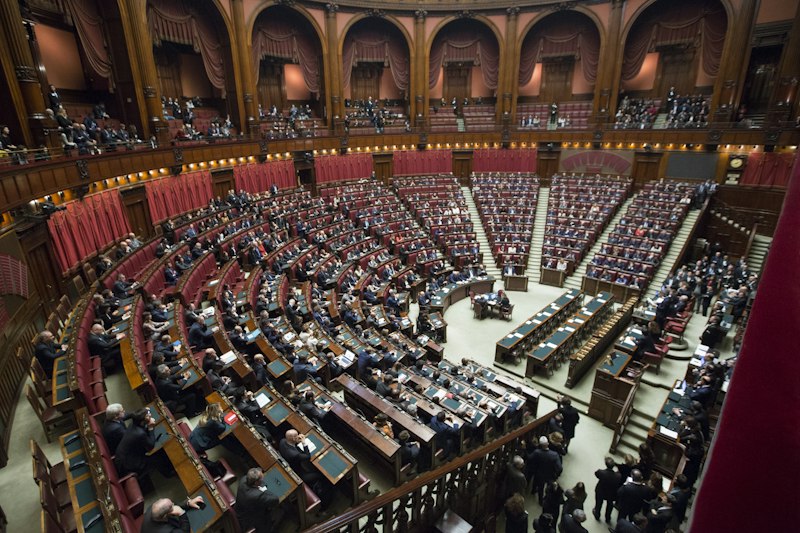
Everyone wants to blame partisan gridlock for Congress's inability to function. Too many ideological tribes. Too much cable news. Too little bipartisan trust. These explanations are emotionally satisfying and politically convenient. They're also missing the actual structural crisis unfolding on Capitol Hill.
The real problem is simpler and more troubling: Congress has become an institution where almost nobody knows how to do the job anymore.
Watch the recent legislative scrambles—the House rushing to adjourn while the Senate plods along, the constant procedural chaos, the basic legislative mechanics that used to work now grinding to a halt. These aren't primarily failures of will or ideology. They're failures of institutional competence. And that's a much harder problem to solve.
Here's what's changed. Twenty years ago, congressional staff members stayed for decades. They learned the Budget Act inside and out. They knew which committees actually held power. They understood the unwritten rules that made the place function. When a new member arrived, they inherited institutional knowledge. The machinery ran on people who had seen ten budget cycles, three debt ceiling fights, and multiple rounds of reconciliation bills.
Today, staff turnover is brutal. Young aides work two or three years, then leave for lobbying or think tanks. The institutional memory walks out the door with them. New staff members arrive without mentors who remember how things actually get done. They're learning on the job while trying to navigate an increasingly complex rulebook. It's like running an airline where the pilots all have three months of experience.
This explains phenomena that pure polarization theory can't quite capture. Why do straightforward bills stall? Why do obvious compromises not happen? Why do both parties sometimes seem shocked when their procedural moves backfire? Because the people running these operations increasingly don't know the terrain.
The partisan divide matters, certainly. But it's not new. What's new is that the partisan divide is now being navigated by legislators and staff with thinner expertise and shallower institutional anchors. That combination is lethal.
Consider what gets lost. A 25-year staffer knows which Senate rule actually prevents a bill from advancing and which rule is just theater. They know which committee chair will fight you and which will come along if you approach them right. They know the difference between a genuine dealbreaker and a negotiating position. A three-year staffer doesn't. They're working from org charts and parliamentary procedure manuals.
This also explains the rise of increasingly chaotic leadership challenges and the difficulty passing even routine bills. When institutional knowledge is thin, formal rules become everything. When formal rules are everything, procedure becomes politics. When procedure becomes politics, nothing moves.
The deeper structural shift is this: Congress is becoming less of a functioning legislature and more of a performance venue for cable news cycles. That's not because members are worse people than they used to be. It's because the institution no longer retains the knowledge necessary to operate at scale.
What would fix this? Paying staff more to retain them longer. Creating fellowships that bind people to the institution. Investing in institutional capacity rather than perpetually cutting legislative branch budgets. None of this sounds as dramatic as "partisan gridlock," but it's the actual disease.
Until Congress treats itself as an organization that needs institutional maintenance, no amount of bipartisan sentiment will change much. You can't compromise your way out of incompetence. You have to build your way out.