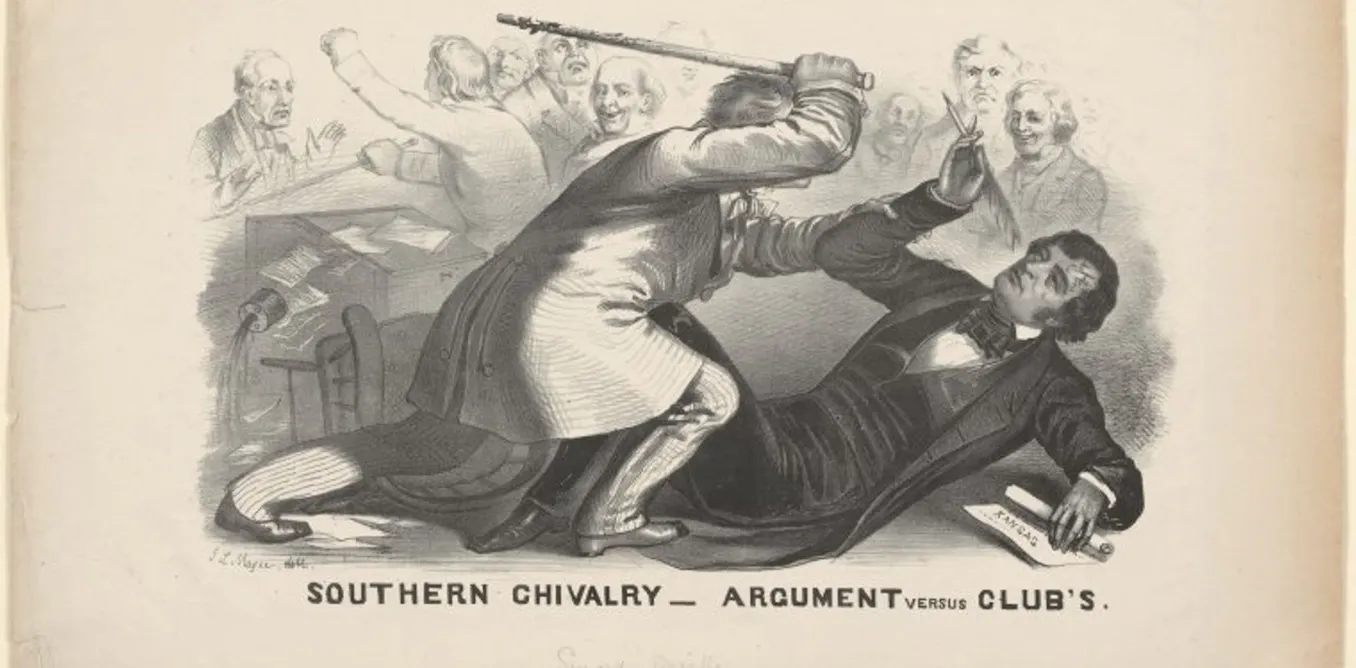
Rep. Preston Brooks of South Carolina attacked Sen. Charles Sumner of Massachusetts on the Senate floor in 1856, beating him unconscious over a speech Sumner had delivered denouncing slavery. The assault ignited a nationwide crisis that forced Americans to confront fundamental questions about free speech, political violence, and the boundaries between them.
Sumner had delivered his "Crime Against Kansas" speech, a scathing condemnation of slavery's expansion into western territories. Brooks, a proslavery congressman, viewed the remarks as an unforgivable insult to his home state and his honor. He entered the Senate chamber and struck Sumner repeatedly with a cane, leaving the senator severely injured.
The attack revealed deep fractures in American democracy. Northern observers condemned Brooks as a thug who had assaulted a man exercising his constitutional right to speak. They saw the beating as a harbinger of the political violence that slavery had introduced into national politics. Southern supporters rallied around Brooks, celebrating his defense of regional honor and viewing Sumner's speech itself as a provocation that transcended acceptable political discourse.
The incident exposed the tension between protecting speech and preventing violence. While Sumner had spoken within the chamber, southern politicians argued that some statements were so inflammatory, so deliberately designed to humiliate and antagonize, that they forfeited the speaker's protection. Northern lawmakers rejected this framework, insisting that robust debate, however harsh, must remain protected.
Brooks faced minimal consequences for his actions. He was censured by the House but resigned before expulsion could occur. He returned to Congress in a special election, hailed as a hero by his constituents. Sumner recovered slowly and returned to the Senate as a martyr to the antislavery cause.
The Sumner-Brooks episode prefigured the Civil War itself. It demonstrated that political elites on both sides had grown unwilling to