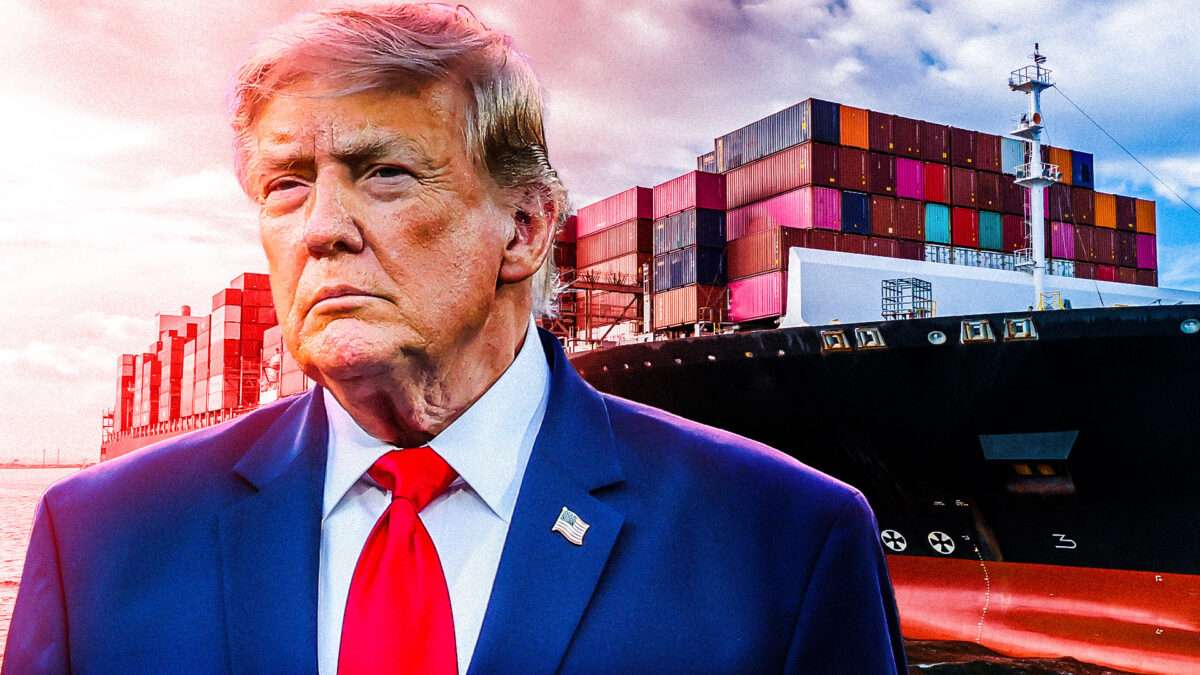
Donald Trump announced new tariffs under Section 301 authority on Thursday, drawing scrutiny from legal experts who argue the levies exceed presidential power and violate established constitutional doctrine.
The tariffs rely on Section 301 of the Trade Act of 1974, which permits the president to impose duties in response to unfair trade practices. Trump's use of this authority has faced repeated legal challenges since his first term. Legal scholars contend these tariffs implicate the major questions doctrine, a Supreme Court principle requiring clear congressional authorization when executive actions involve decisions of vast economic and political consequence.
The major questions doctrine gained prominence after the Supreme Court invoked it in 2022 to strike down an Environmental Protection Agency rule on carbon emissions. Courts have applied similar reasoning to question whether presidents can unilaterally impose sweeping trade restrictions without explicit legislative direction. Trump's tariff announcements typically target specific nations or products, but the breadth and economic impact of his Section 301 actions arguably exceed what Congress authorized in the 1974 statute.
Congress delegated to the president the authority to investigate trade complaints and respond accordingly, yet critics argue Congress did not grant the executive branch a blank check to reshape trade relationships on this scale. The administration maintains Section 301 provides sufficient authority and that the tariffs serve legitimate national security and trade enforcement purposes.
Legal challenges to Trump's tariff authority will likely reach federal courts again. The Court of International Trade and appellate courts have previously scrutinized these measures. Whether the current Supreme Court would apply the major questions doctrine to trade tariffs remains uncertain, though recent decisions suggest the Court takes the doctrine seriously when executive power expands significantly.
The tariff dispute reflects broader tension between presidential flexibility in trade matters and congressional control over commerce. Future litigation will determine whether Trump's latest tariffs survive judicial review or face invalidation based on constitutional limits.