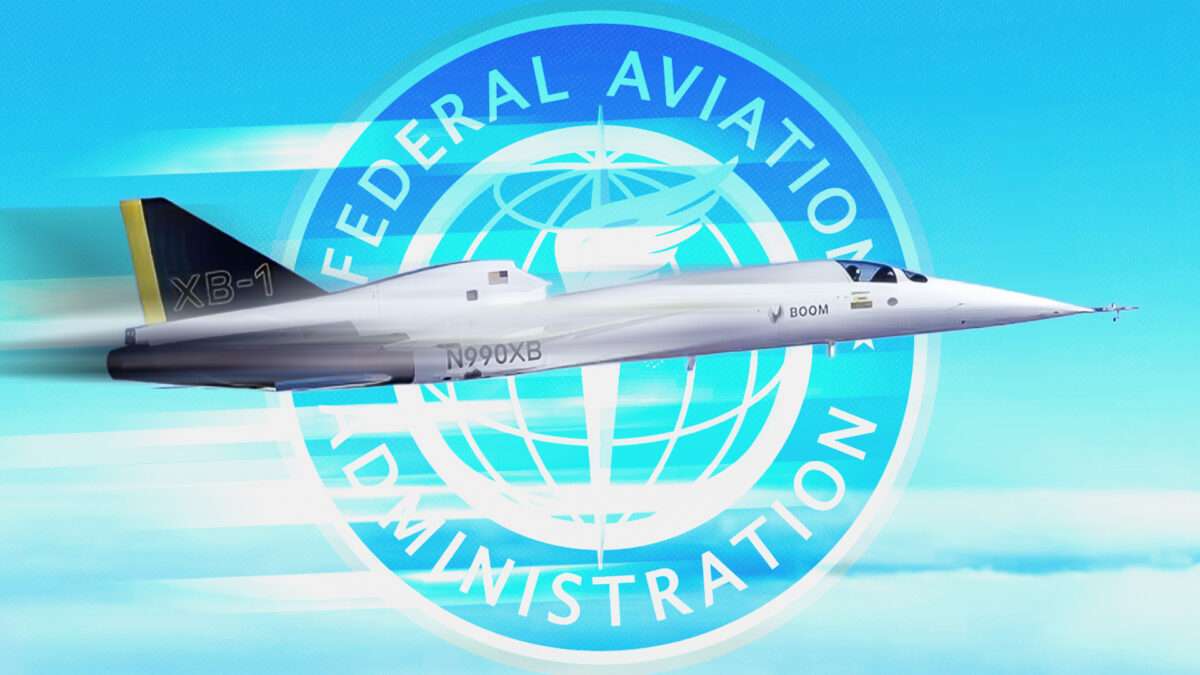
The Trump administration's Federal Aviation Administration is moving to lift a decades-old ban on supersonic flights over land in the United States, a shift that opens the door for commercial supersonic aircraft to operate domestically.
The regulation, established 50 years ago, restricts supersonic travel to ocean routes only. The ban stems from concerns about sonic booms disturbing populated areas. The FAA's movement suggests the administration sees commercial opportunity in relaxing noise restrictions that have effectively grounded supersonic ambitions for domestic routes.
Boom Supersonic, a Denver-based aerospace company, stands as the primary beneficiary of any rule change. The company develops Overture, a supersonic aircraft designed for passenger travel. Lifting the ban would allow Boom to operate flights across U.S. airspace rather than limiting routes to transoceanic corridors.
The FAA process remains measured despite the administration's apparent enthusiasm. Regulatory change happens incrementally within federal agencies, even under administrations committed to deregulation. The agency must balance commercial interests against environmental and quality-of-life concerns for Americans living under flight paths.
Sonic boom complaints have historically driven public opposition to supersonic flight. Concentrated noise from aircraft exceeding the speed of sound creates measurable disturbance over broad geographic areas. The original ban reflected genuine public frustration after Concorde operations generated persistent complaints during the 1970s and earlier.
Modern technology may address these concerns differently than the Concorde era. Advances in aircraft design and noise mitigation could reduce sonic boom impact substantially. The FAA's reconsideration suggests agency engineers see technical solutions to problems that once seemed intractable.
This regulatory shift reflects broader Republican skepticism toward environmental restrictions and enthusiasm for technological advancement. The administration views supersonic flight as a business opportunity rather than primarily as a noise pollution problem. Whether the FAA ultimately eliminates or modifies the ban depends