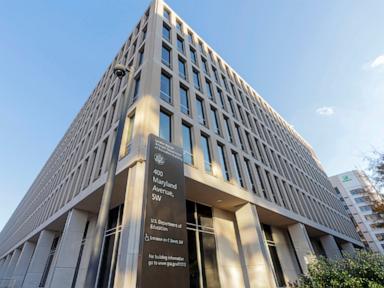
The Education Department eliminated a longstanding civil rights enforcement tool that allowed officials to challenge school policies causing disproportionate harm to minority students, even without proving intentional discrimination.
The rescinded "disparate impact" standard represented a major shift in how the federal government enforces civil rights protections under Title VI of the Civil Rights Act of 1964. Under the old rule, education officials could target policies that created unequal outcomes for protected groups, regardless of intent. A school's discipline system that suspended Black students at higher rates, for example, could face investigation and penalties without evidence of deliberate bias.
The new standard requires proof of intentional discrimination. Schools must now demonstrate they designed policies to discriminate against specific groups. The burden shifts substantially toward proving motivation rather than measuring results.
Education Secretary Betsy DeVos championed the change, arguing the disparate impact framework punished schools for neutral policies and created regulatory overreach. The Department concluded the previous standard conflicted with Supreme Court precedent and exceeded federal authority under civil rights law.
Civil rights advocates view the rescission as a severe weakening of protections for students of color, English language learners, and students with disabilities. They argue disparate impact rules provided practical redress when schools maintained facially neutral policies that perpetuated segregation and inequality. School choice policies, gifted program admissions, and zero-tolerance discipline approaches have faced challenges under disparate impact analysis.
The change aligns with the Trump administration's broader deregulation agenda and skepticism toward expansive civil rights enforcement. It reflects ongoing legal and political debate about whether federal agencies should focus on intentional discrimination or outcomes-based equity.
The ruling affects how the Education Department's Office for Civil Rights investigates discrimination complaints. Schools nationwide gain greater latitude to implement policies with unequal racial consequences without facing federal scrutiny, provided officials cannot prove intentional bias.