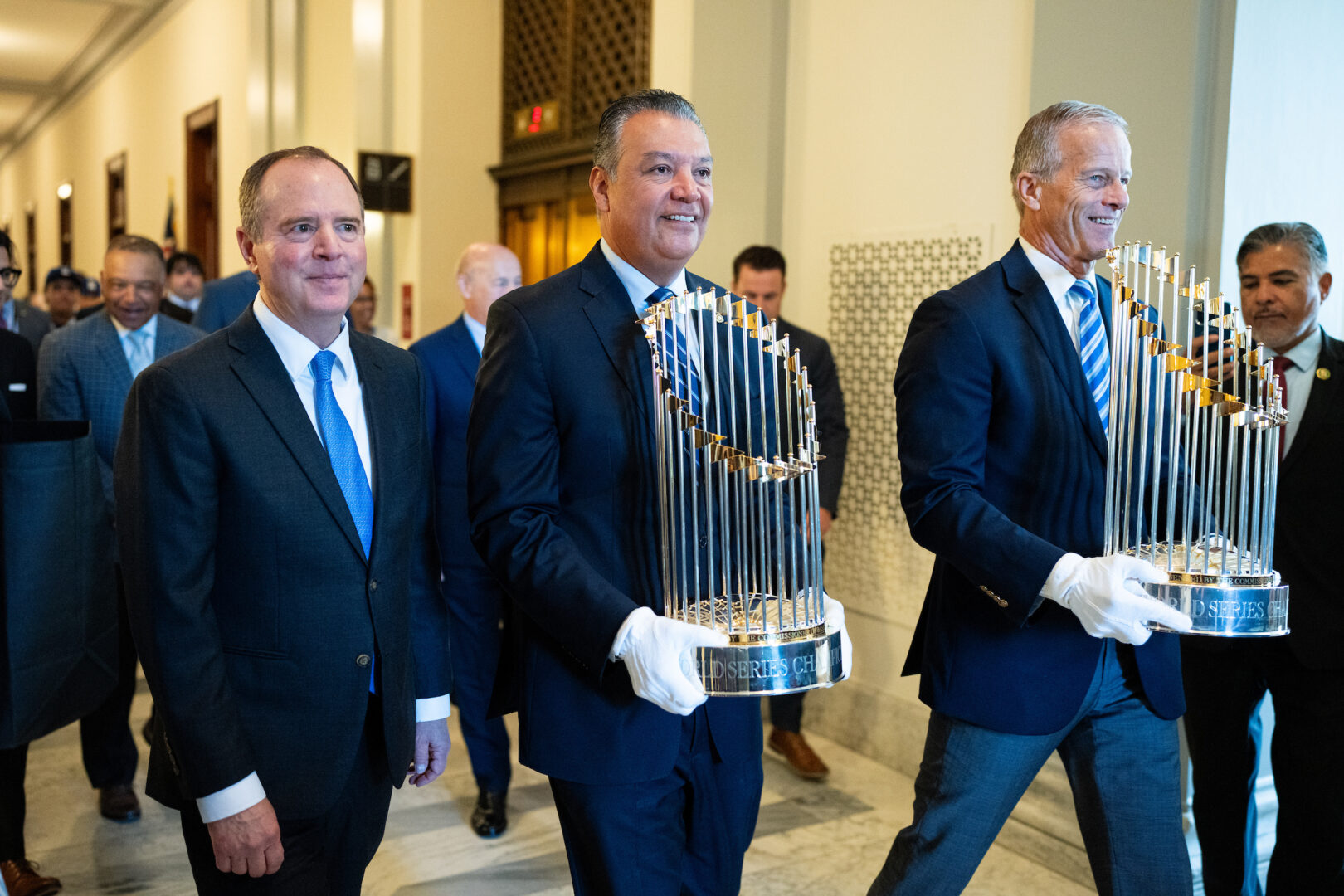
Senate Majority Leader John Thune joined California Senators Adam Schiff and Alex Padilla in escorting the Los Angeles Dodgers' World Series trophies through the Russell Senate Office Building on Thursday. The display celebrated the team's back-to-back championships in 2024, a rare achievement in modern baseball.
The ceremonial moment reflected a Capitol tradition of honoring championship teams with Senate visits. Thune, a South Dakota Republican who assumed the majority leader role in January 2025, coordinated the appearance alongside the two California Democrats. Such bipartisan gestures, focused on regional sports pride rather than policy disputes, provide rare moments of unity in a polarized Congress.
The Dodgers' consecutive titles mark their second and third championships since relocating to Los Angeles in 1957. The team's presence on Capitol Hill underscored California's cultural and economic footprint in national discourse. Schiff, who represents the state's coastal districts, and Padilla, elected in 2020, both leverage their Senate positions to promote California interests and maintain constituent connections.
Thune's participation demonstrated the majority leader's willingness to engage in ceremonial duties that transcend partisan divides. These Capitol visits serve practical functions beyond symbolism. They provide senators with constituent engagement opportunities and generate positive media coverage that counters the acrimony dominating legislative debate.
The trophy presentation took place amid a Congress grappling with immigration reform, fiscal deadlines, and judicial confirmations. The ceremonial break offered lawmakers and staff respite from substantive conflicts that define their legislative agenda. Such moments, while brief, maintain institutional traditions that date back generations.
The Dodgers' appearance reinforced baseball's enduring role in American political life. Presidents throw opening-day pitches. Congressional leaders host championship teams. These rituals embed sports into the fabric of governance, creating shared experiences that transcend ideology.