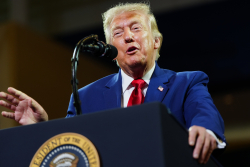
Donald Trump deploys the label "communist" against political opponents with increasing frequency, mirroring tactics used by Viktor Orban in Hungary and Jair Bolsonaro in Brazil. Both foreign leaders successfully weaponized communist rhetoric to consolidate power and delegitimize rivals.
Orban transformed Hungary from a democracy into what critics call an "electoral autocracy" by casting opponents as threats to national security. He painted George Soros and liberal institutions as communist infiltrators bent on destroying Hungarian sovereignty. This framing allowed Orban to justify dismantling judicial independence, controlling media, and restricting civil liberties. Hungarian voters repeatedly returned him to power despite these authoritarian measures.
Bolsonaro employed identical strategies in Brazil. He portrayed the left-wing Workers Party as communists intent on destroying Christian values and national identity. The communist label activated deep cultural anxieties rooted in Cold War memory, even though Brazil's left-wing parties operated within democratic frameworks. Bolsonaro leveraged this narrative to win the 2018 presidency and energize his base.
Trump now follows this playbook. He labels Vice President Kamala Harris, California Governor Gavin Newsom, and other Democrats as communists or communist-sympathizers. He frames Democratic policies on climate, healthcare, and immigration as dangerous communist ideology threatening American greatness. Unlike Orban and Bolsonaro, Trump operates within a stronger democratic system with more institutional checks. Yet the rhetorical strategy remains identical: reduce complex policy disagreements to existential battles between patriotic nationalism and communist infiltration.
The pattern reveals how populist-leaning leaders exploit Cold War anxieties to build polarized coalitions. By casting political opponents not as disagreeable but as ideological enemies, these leaders justify hardline responses and dismiss institutional constraints as obstacles to national salvation. The tactic proves effective in democracies where historical memory of