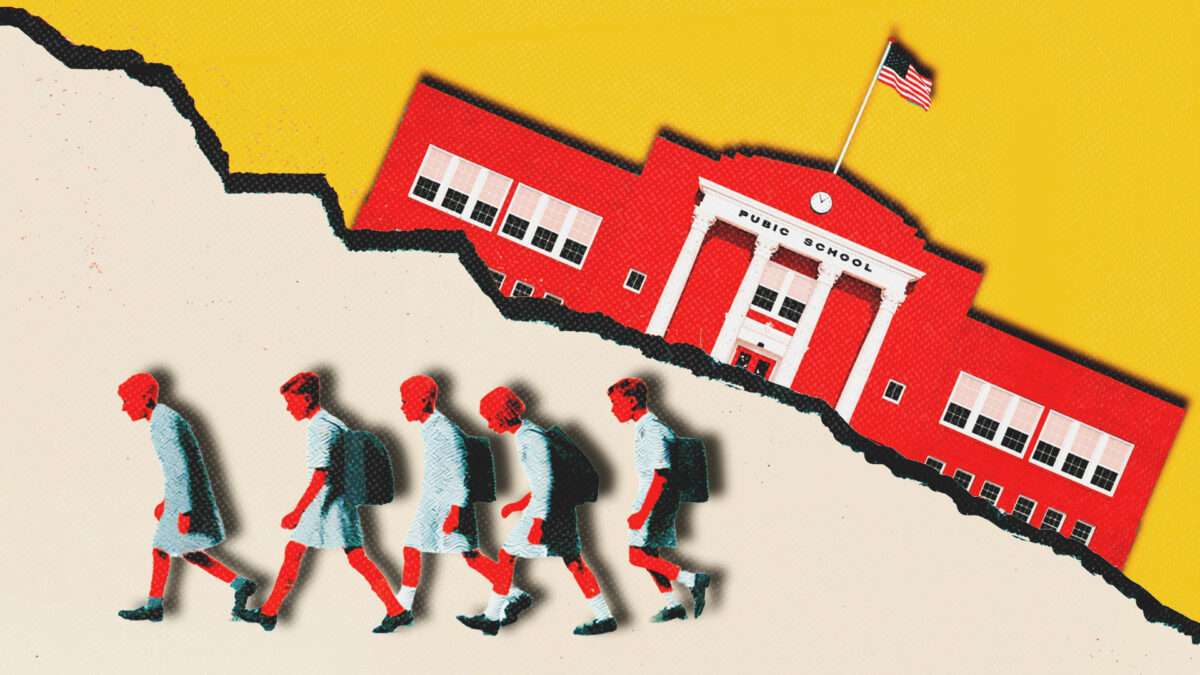
Public school enrollment has plummeted by 1.4 million students since the COVID-19 pandemic began, yet district budgets have expanded by 34 percent over the same period. This disconnect between falling student numbers and rising spending reflects a structural problem in how schools fund operations.
The enrollment collapse accelerated trends that began before 2020. Some students shifted to private schools, homeschooling, or charter schools. Others simply did not return to traditional public schools after pandemic closures. Meanwhile, achievement levels have declined across reading and mathematics, with the largest drops among disadvantaged students.
Budget increases have not reversed learning losses. Schools received federal stimulus funding through successive COVID relief packages, which propped up spending even as enrollment dropped. Many districts maintained payroll and facilities costs despite serving fewer children. The spending surge occurred without corresponding gains in test scores or graduation rates.
The fiscal reality creates tension in education policy. School districts argue they face legitimate cost pressures including special education mandates, infrastructure maintenance, and pension obligations that do not scale down with enrollment. Teachers' unions have resisted staffing reductions tied to enrollment losses. At the same time, critics argue districts have failed to adjust operations to match student populations.
This pattern has renewed debate over education funding formulas. Some states tie per-pupil spending to actual enrollment. Others fund schools based on historical enrollment patterns, insulating budgets from drops in attendance. The disconnect between spending and student numbers also raises questions about whether additional dollars reach classrooms or accumulate in administrative overhead.
The spending trajectory troubles fiscal conservatives and education reformers who question whether more money improves outcomes. For families, the data suggests that massive budget increases have coincided with measurable declines in educational performance. School leaders contend that fixed costs and demographic shifts require time to address, but the gap between enrollment and spending remains politically contentious heading into the 2024 budget cycle.