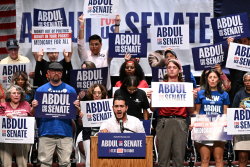
Abdul El Sayed's 2024 Michigan Senate campaign represents a pivotal test of whether openly socialist candidates can compete in purple battleground states. The Democratic primary contender runs on a platform centered on Medicare for All, aggressive climate action, and wealth redistribution. His viability signals a broader shift within Democratic politics toward embracing candidates further left than establishment figures typically support.
Michigan's electoral history makes this race consequential. The state swung for Donald Trump in 2016, returned to Democrats in 2020, and remains deeply competitive. A socialist candidate advancing through the primary would reshape the general election dynamics against Republican Senator John Beshear's successor or challenger, depending on the seat's status.
El Sayed, a physician and former Michigan Department of Health director, brings credibility beyond typical leftist activist credentials. His government experience and medical background provide cover against accusations of radical inexperience. Yet his explicit embrace of socialism differs sharply from Democratic senators who advocate progressive policies without adopting the label.
The race tests whether Michigan voters view socialism as disqualifying or whether economic messaging around healthcare costs and wage stagnation overrides ideological reservations. Democratic primary voters increasingly embrace Medicare for All rhetoric, but general election voters remain more cautious. El Sayed's performance reveals whether that primary enthusiasm translates into sustained support.
National implications extend beyond Michigan. Successful socialist campaigns in swing states could normalize the label within Democratic politics, encouraging similar candidates nationally. Conversely, El Sayed's defeat would reinforce establishment arguments that centrist candidates perform better in competitive terrain.
The Michigan Senate race functions as a referendum on whether American voters in pivotal states accept explicit socialist framing, or whether progressive policy substance divorced from socialist branding remains the safer electoral path for Democrats competing in purple America.