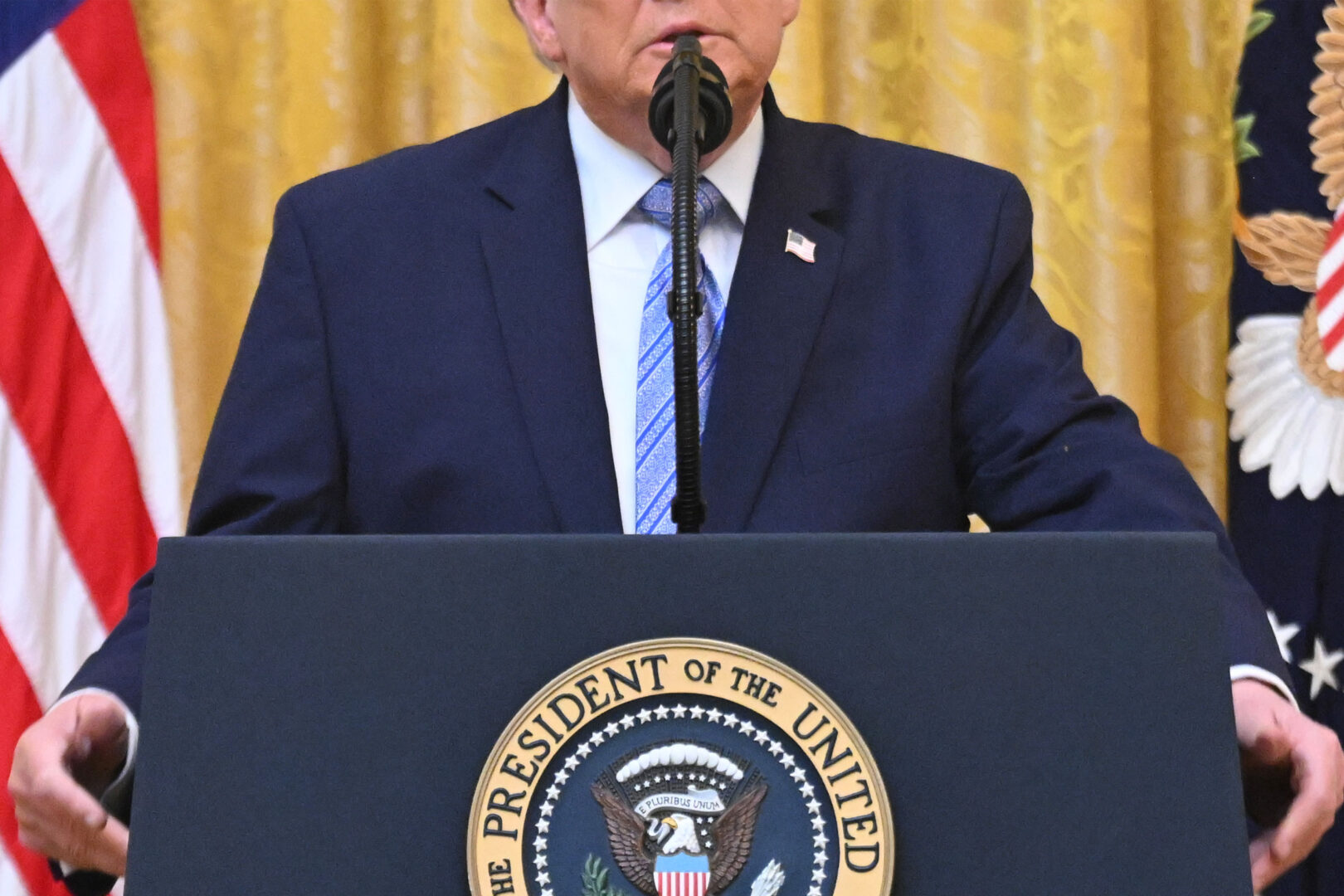
Trump has made thousands of fraud assertions across four decades of public statements, according to a Factbase analysis tracking his claims since 1988. The database examines statements from speeches, interviews, social media posts, and other public communications to catalog allegations spanning local, state, national, and international levels.
The analysis encompasses Trump's recent Thursday primetime address alongside decades of earlier rhetoric. Factbase created an interactive tool to organize and track these fraud claims systematically. The project reflects the scale of Trump's voter fraud messaging, particularly intensifying after the 2020 presidential election.
Trump has repeatedly alleged widespread election irregularities without consistently providing supporting evidence. His claims have drawn scrutiny from election officials, courts, and fact-checkers across the political spectrum. Multiple legal challenges to fraud allegations failed in 2020 and 2021, with judges appointed by both parties rejecting the cases.
The Factbase project offers a searchable record of Trump's fraud assertions, enabling journalists and researchers to trace how his rhetoric evolved over time. The database distinguishes between claims made before 2020 and those following his election loss, showing a marked shift in frequency and focus.
Trump's fraud claims remain central to Republican political messaging heading into 2024. Supporters argue the assertions reflect legitimate concerns about election integrity. Critics contend the unfounded claims undermine public confidence in democratic institutions and voting processes.
Election security experts have consistently stated that modern U.S. elections are secure and that voter fraud remains extremely rare. State election officials from both parties certified 2020 results, and Trump's own Department of Justice called the election "the most secure in American history."
The Factbase analysis provides data for ongoing debate about election integrity, Trump's political influence, and the relationship between political rhetoric and democratic participation.