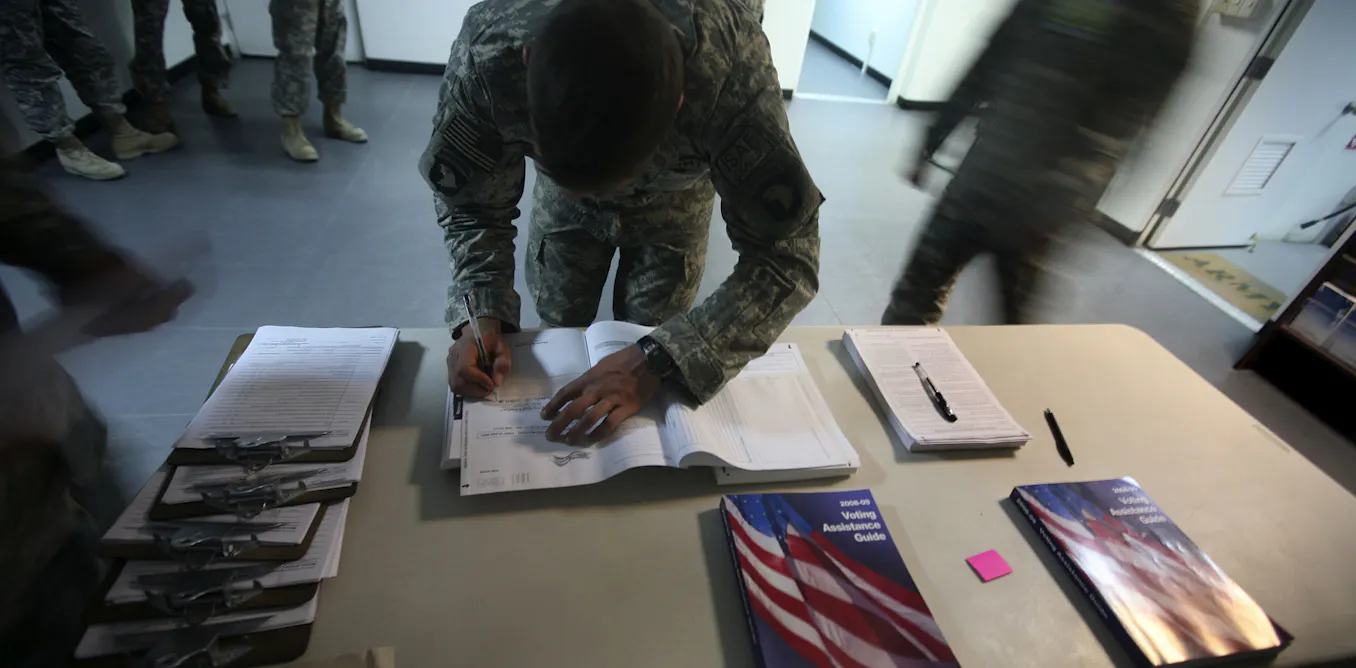
The Supreme Court's recent decision on mail-in voting traces its roots to Civil War-era accommodation for military personnel. The practice emerged in the 1860s specifically to allow soldiers fighting for the Union to cast ballots despite being far from home. This historical foundation shaped the Court's modern analysis of election procedures.
The justices grounded their reasoning in the longstanding principle that mail-in voting serves military interests. This context proved significant because it established mail-in voting as a legitimate, constitutionally rooted practice rather than a recent innovation vulnerable to restriction. The Court acknowledged that over 160 years of precedent created a strong foundation for permitting expanded mail voting access.
The decision reflects how historical practices influence contemporary constitutional interpretation. Rather than viewing mail-in voting as a modern departure from traditional voting methods, the Court situated it within American electoral tradition. Military voters, including active-duty service members and veterans, represented a constituency both parties recognized as deserving accommodation.
This framing mattered for the broader debate over voting access. Opponents of expanded mail voting struggled to argue against a practice explicitly designed for Americans serving their country. The military context lent the practice cultural and constitutional legitimacy that purely administrative arguments could not achieve.
The ruling demonstrates how the Court navigates partisan election disputes by anchoring decisions in history. Both conservative and progressive justices could accept mail-in voting's legitimacy when traced to Civil War necessity rather than debated as a contemporary policy choice. Military voters thus provided common ground in a fractious debate.
The decision carries practical implications for millions of service members stationed overseas and domestic military personnel. It preserves voting pathways established over generations and affirms that mail-in ballots remain constitutionally sound. This outcome protects participation for voters who sacrifice geographic proximity to polling places for national service.