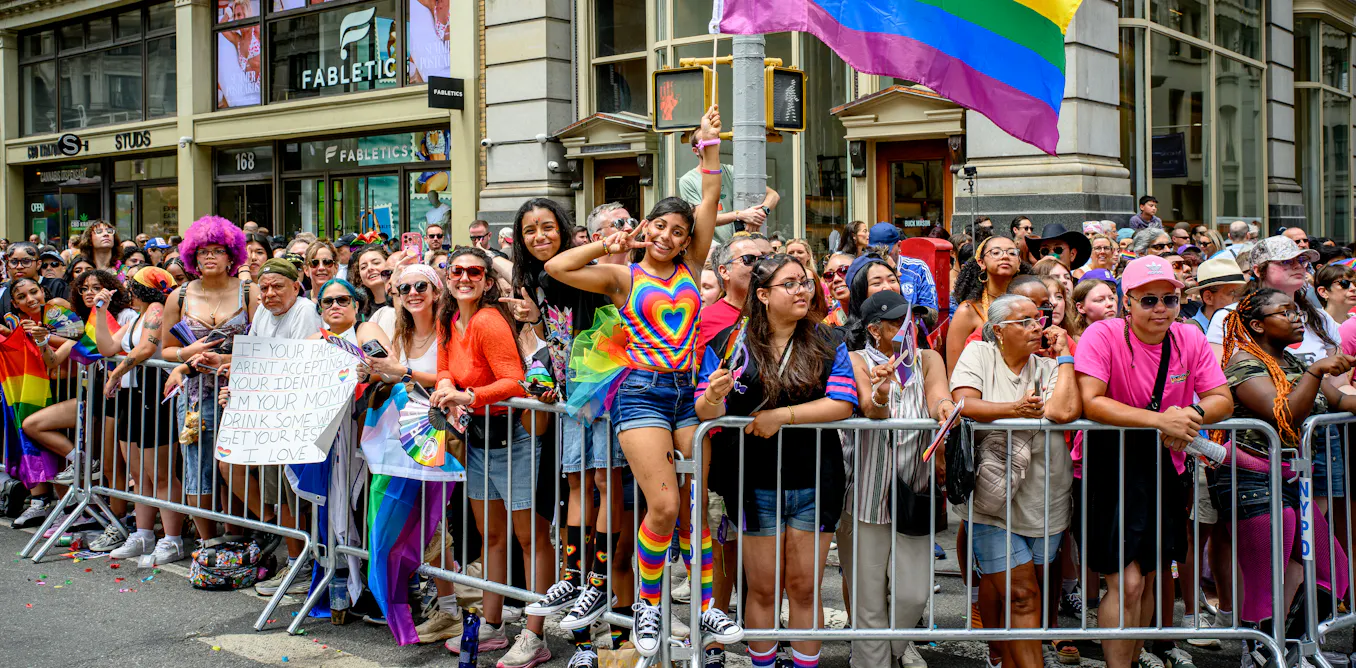
Young women increasingly identify outside strict heterosexuality while young men maintain traditional sexual orientations at higher rates, reflecting divergent cultural pressures on each gender.
Recent surveys document a growing share of women under 30 reporting bisexual, lesbian, or fluid orientations. Men the same age show far less movement away from heterosexual identification. This gap points to asymmetrical social permission structures. Women face fewer penalties for exploring same-sex attraction or rejecting binary sexual categories. Men encounter stronger enforcement of heterosexuality as a core component of masculine identity.
The pattern reflects broader gender norms. Femininity has expanded considerably to accommodate emotional intimacy, physical affection, and romantic interest across gender lines. Women kissing women or expressing attraction to women reads as acceptable exploration. Masculinity remains narrower. Men who express same-sex interest risk being labeled weak or unmanly, deterring many from openly identifying outside heterosexuality even when their attractions might justify it.
Economic and social changes amplify this divide. Young women have gained educational and professional independence that allows them to prioritize personal authenticity over traditional relationship scripts. Delayed marriage and expanded social networks create space for identity experimentation. Young men face persistent expectations to demonstrate heterosexual conquest and dominance as proof of manhood.
Dating app data and polling consistently show this divergence. Women report higher rates of same-sex experiences and non-binary attraction. Men report stable heterosexual identification across decades, suggesting the hesitation reflects social constraint rather than actual orientation distribution.
This disparity matters for LGBTQ acceptance and youth mental health. If men feel unable to explore or name their attractions openly, depression and isolation follow. If women claim space for fluid identity while men cannot, it distorts public understanding of sexual orientation itself. It also means heterosexual male identity carries an inflexibility that potentially harms men forced to maintain rigid personas.
Loosening