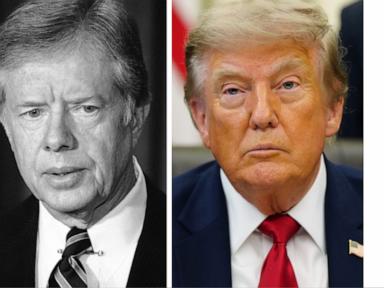
Donald Trump has softened his public criticism of former President Jimmy Carter, marking a notable shift in rhetoric from the Republican leader who previously attacked Carter's presidency and policies.
Trump's recalibration comes as he navigates multiple governing challenges including escalating tensions with Iran, persistent inflation pressures, and his efforts to shape his own presidential legacy. The timing suggests Trump may be seeking to appear more statesmanlike during his current term while addressing economic headwinds that threaten public confidence.
During his first presidency and the years after, Trump frequently criticized Carter's handling of the Iran hostage crisis, foreign policy decisions, and economic management. Carter's death in December 2024 appeared to prompt a reassessment. Trump has since offered more measured comments acknowledging Carter's decades of post-presidency humanitarian work through the Carter Center.
The Iran dimension carries particular weight. Carter faced severe political damage over the 1979 hostage crisis that lasted 444 days. Trump has positioned himself as tough on Iran through maximum pressure campaigns and military posturing, contrasting his approach with what he views as Carter's weakness. Yet rising regional tensions and potential conflict require Trump to demonstrate presidential gravitas rather than partisan point-scoring.
Inflation remains an urgent concern for Trump's administration. Carter's legacy is inextricably linked to stagflation of the 1970s. By softening his Carter criticism, Trump risks less comparison to a presidency defined by economic malaise. This allows him to focus messaging on his current inflation-fighting efforts without inviting historical parallels.
Trump's legacy positioning also factors heavily. As a former president returning to office, Trump faces questions about his historical standing. Magnanimity toward predecessors, even rivals, burnishes a leader's image. Trump's more diplomatic tone on Carter projects a confidence about his own accomplishments and appeal to voters evaluating both leaders' records.
The shift does not indicate policy changes