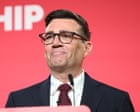
Andy Burnham takes over as Labour Party leader and will become Prime Minister on Monday, pledging to end internal party divisions and govern without factional infighting. Burnham, the former Mayor of Greater Manchester, outlined a distinctly leftwing agenda focused on reversing 1980s Thatcherism through increased public ownership of utilities, expanded social care funding, and new council house construction.
His appointment comes amid tension within Labour's left wing over his likely choice of Shabana Mahmood as chancellor. Mahmood's selection has sparked anxiety among party progressives, suggesting potential disagreement over economic policy direction within the incoming government.
Burnham framed the government's mandate with urgency, stating it has a "last chance" to deliver for the British public. His platform emphasizes state intervention and public investment, positioning Labour's new direction against decades of market-oriented Conservative governance.
The timing of Mahmood's appointment as chancellor reflects a deliberate choice by Burnham to shape his cabinet's ideological balance. While Burnham's rhetoric leans left, Mahmood's economic stewardship may signal pragmatism on fiscal matters, potentially creating tension between party wings during implementation of policy.
Burnham's promise of unified governance addresses Labour's recent history of internal conflict, particularly disputes between moderates and progressives that defined the party under previous leadership. His emphasis on ending infighting suggests a commitment to cabinet discipline and preventing public disagreements that damaged party cohesion in recent years.
The incoming Prime Minister must navigate balancing his stated leftwing vision with the practical constraints of governing. His agenda for public ownership and housing expansion requires substantial public funding at a time when fiscal pressures remain acute. The relationship between Burnham and Mahmood at the Treasury will define whether Labour's progressive rhetoric translates into policy reality or becomes constrained by economic orthodoxy.