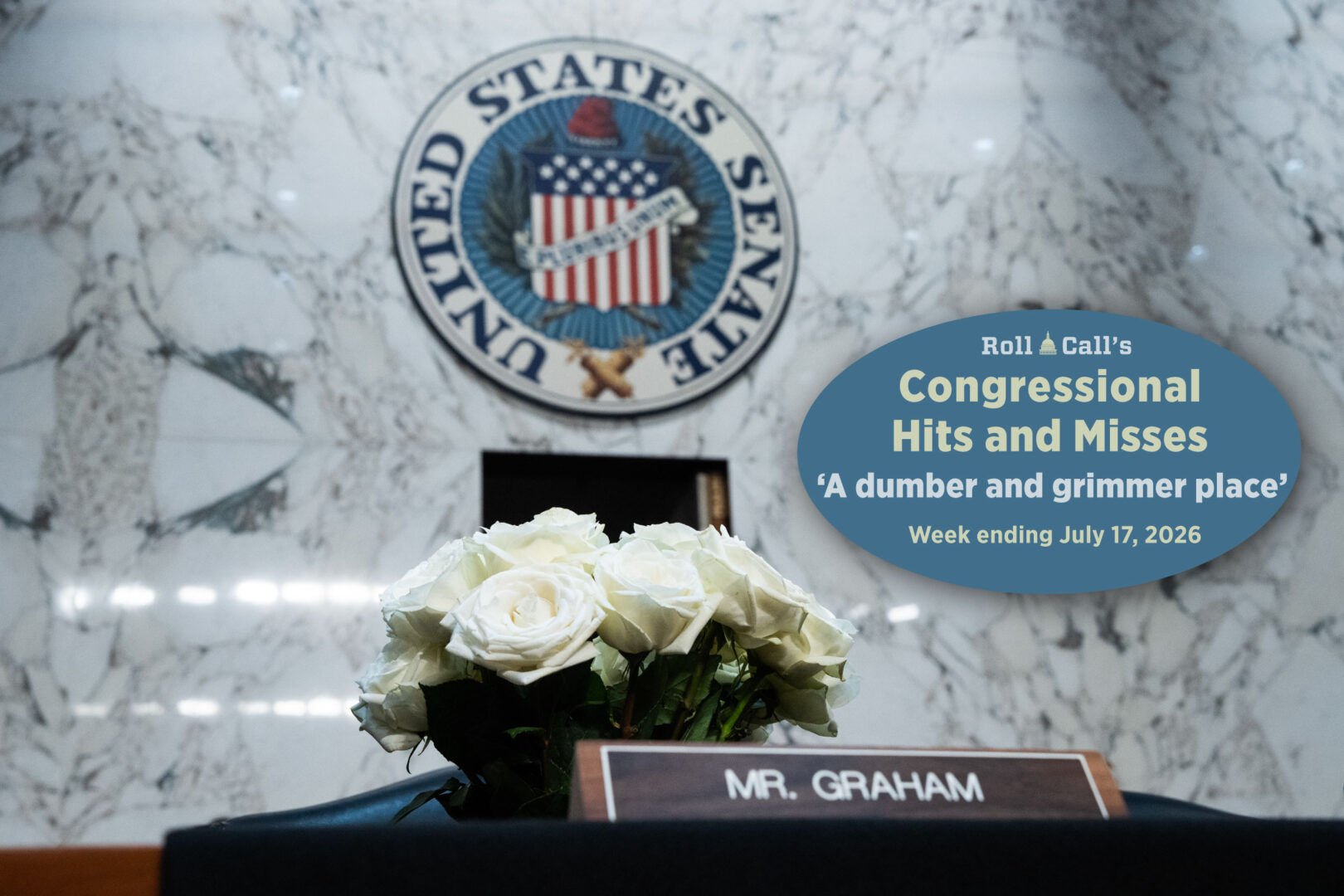
# Congressional Hits and Misses Reflect Divided Capitol
Congress this week confronted a series of moments that underscore the chamber's current divisions and operational challenges. Roll Call, the influential Capitol Hill publication, received qualified praise while processing coverage of the legislative landscape. Meanwhile, controversial Trump nominees proceeded through confirmation hearings on the Hill, advancing contentious picks through the Senate judiciary process.
Lawmakers also paused to remember the late Sen. Lindsey Graham, who died on July 11. Graham, a South Carolina Republican who served in the Senate since 2003, had become a polarizing figure in recent years. Once a vocal Trump critic after the 2016 election, Graham shifted dramatically to become one of the former president's closest allies in Congress. His death marked the loss of a 27-year Senate veteran who had shaped foreign policy and judicial confirmation battles for two decades.
The week's events reflect ongoing tensions within the legislative branch. Trump's nominees faced scrutiny from Democrats while Republican colleagues largely defended the selections. The confirmation process has become increasingly partisan, with each party mobilizing fully against or for presidential picks based on ideological alignment rather than traditional qualifications-based review.
Graham's passing represents a changing of the guard in the Senate. Younger members lack the institutional relationships and deal-making networks that Graham, despite his inconsistencies, helped maintain. His sudden death leaves a vacancy in South Carolina that will require a special election process.
The convergence of these moments paints a portrait of Congress grappling with transition, high partisanship, and the loss of experienced operators. The "hits and misses" framework suggests that legislative effectiveness has become sporadic rather than consistent, with outcomes dependent more on party loyalty than bipartisan problem-solving. Roll Call's coverage faces the task of documenting a chamber that operates less on legislative achievements than on confirmations, memorial services, and ideological combat.