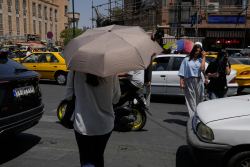
Iran's economy continues to deteriorate under intensifying international pressure, forcing regime officials to confront a deepening crisis that threatens both living standards and political stability. Inflation rates remain elevated while currency valuations plummet, straining ordinary Iranians' purchasing power and access to basic goods.
The Islamic Republic faces compounding economic headwinds from multiple directions. Renewed sanctions targeting oil exports, financial transactions, and critical industries restrict Tehran's access to foreign currency reserves. Regional conflicts and military expenditures consume government resources that might otherwise address civilian needs. Domestic corruption and mismanagement further drain productivity across state enterprises.
Historically, Iran's leadership has prioritized regime security over economic welfare. Supreme Leader Ayatollah Khamenei and his affiliated factions have repeatedly chosen to absorb massive public hardship rather than negotiate away what they view as non-negotiable principles of national sovereignty. This pattern suggests current leaders will maintain their defensive posture even as conditions worsen for ordinary citizens.
The resulting economic squeeze creates tangible consequences for Iranian households. Workers face wage stagnation while prices accelerate. Middle-class professionals experience eroding savings. Access to imported medicines and medical supplies becomes increasingly difficult. Youth unemployment remains chronically high, driving emigration among educated Iranians seeking opportunities abroad.
Economic hardship historically generates social discontent, and Iran has witnessed periodic protests over living costs and government spending. However, security forces maintain capacity to suppress large-scale unrest through detention, surveillance, and controlled violence. The regime's tolerance for public suffering exceeds most democratic governments, reflecting its assessment that economic pain remains preferable to perceived existential threats.
International actors remain divided on how to respond. Some Western nations view economic pressure as leverage to force concessions on nuclear programs and regional behavior. Others argue sanctions prove counterproductive, entrenching hardliners within Iranian politics while punishing citizens. This strategic disagreement ensures economic co