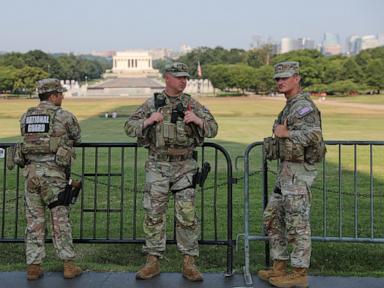
President Donald Trump extended the National Guard deployment to Washington, D.C. through the end of his term, expanding an operation that will now span more than two additional years.
The deployment, which involves military personnel providing support in the nation's capital, represents a continuation of security measures Trump initiated during his presidency. The extension keeps Guard members stationed in D.C. beyond the initial deployment window, making it a sustained security posture rather than a temporary measure.
Trump administration officials framed the decision as necessary for protecting federal infrastructure and maintaining order in the capital. The Guard units assist with various tasks including security operations and logistical support for federal facilities.
The move carries political weight. Deployment of military forces to domestic locations remains controversial, with Democrats and civil liberties groups historically opposing large National Guard presences in American cities. Republicans generally support enhanced security measures in the capital, particularly following security incidents at federal buildings.
The extended deployment raises questions about operational costs, the role of military personnel in civilian spaces, and precedent-setting for future administrations. Keeping thousands of Guard members in Washington consumes federal resources and raises concerns among some lawmakers about the militarization of the nation's capital.
Trump's decision to extend through his full term signals confidence in continued security operations and suggests the administration views the Guard presence as a long-term solution to capital security challenges. The deployment will remain in place regardless of broader shifts in security policy or congressional action unless Trump reverses the order before leaving office.