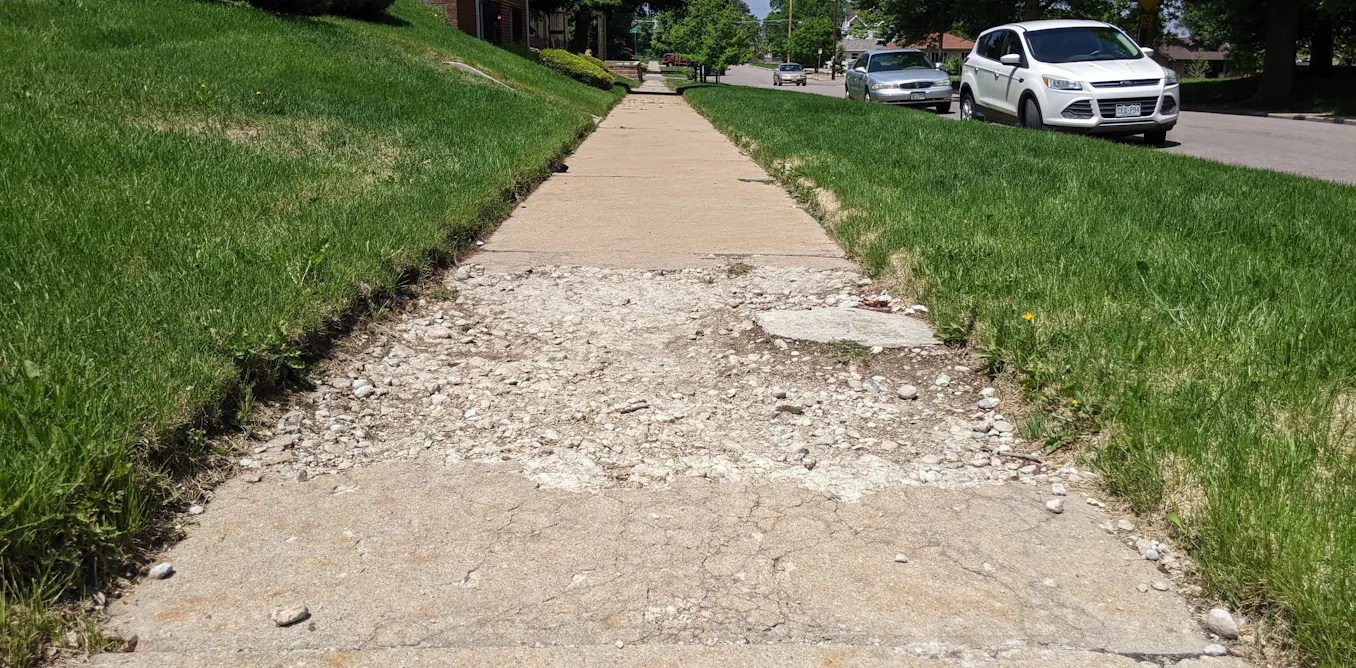
Denver passed new legislation establishing a municipal sidewalk program that shifts responsibility for sidewalk maintenance from individual property owners to the city government. The policy change reflects growing recognition that treating sidewalk repair as a private responsibility creates dangerous, uneven infrastructure and widens equity gaps.
Under the previous system, Denver property owners bore financial and legal obligation to maintain sidewalks adjacent to their properties. This created several problems. Homeowners faced unpredictable costs for repairs, while renters had no control over sidewalk conditions. Wealthier neighborhoods ended up with better-maintained sidewalks than lower-income areas, where residents lacked resources for expensive repairs. Cracked and uneven sidewalks posed safety hazards, particularly for elderly residents, people with disabilities, and parents with strollers.
Denver's new approach treats sidewalks as public infrastructure rather than private responsibility. The city now funds building, repair, and maintenance through its budget. This centralizes decision-making and ensures consistent standards across all neighborhoods regardless of resident income or property values.
The Denver model offers lessons for other municipalities wrestling with sidewalk maintenance. Cities nationwide have historically relied on private property owners to maintain public infrastructure, creating fragmented systems where repair quality depends on individual financial capacity. Several other cities, including San Francisco and portions of California, have adopted similar municipal approaches.
For homeowners currently responsible for sidewalk repairs, the shift reduces liability and unpredictable expenses. It also promotes pedestrian safety by ensuring repairs meet professional standards. The municipal approach addresses environmental justice concerns by preventing lower-income neighborhoods from becoming infrastructure deserts.
Denver's legislation demonstrates that viewing sidewalks as public goods rather than private burdens produces more equitable, safer cities. As pedestrian infrastructure gains attention in urban planning discussions, other municipalities may follow Denver's lead in assuming direct responsibility for sidewalk construction and maintenance.