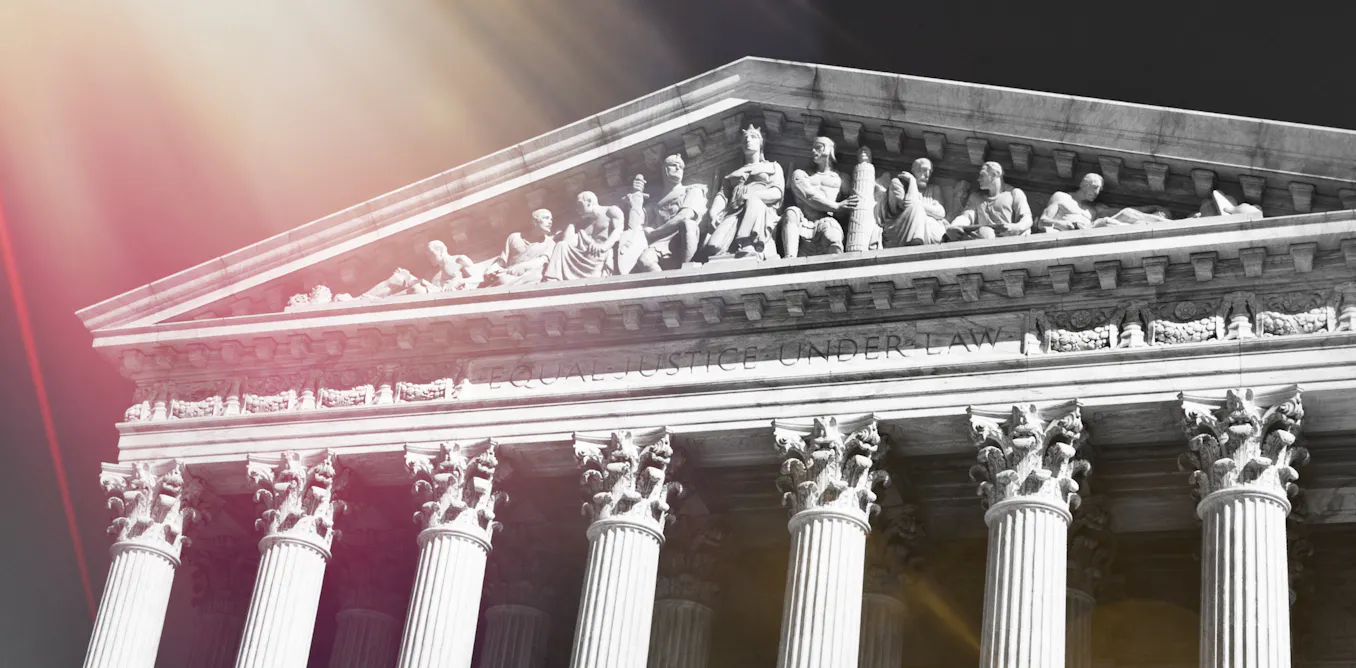
# Supreme Court's Contentious Term Draws Judicial Review
A former federal judge offers analysis of a Supreme Court term marked by major rulings and sharper language among justices. The reviewer acknowledges the court ultimately fulfilled its constitutional role despite the escalating tone in opinions.
The term produced decisions that reshaped American law across multiple domains. Justices issued rulings on abortion, voting rights, affirmative action, and other contentious matters. These decisions generated fierce dissents that reflected deeper ideological divisions on the bench.
The former judge identifies a troubling trend. Justices increasingly employ pointed rhetoric when disagreeing with each other. The invective in opinions has grown more personal and less restrained than in previous decades. This shift mirrors broader polarization in American politics, seeping into the traditionally formal judicial process.
Despite criticism of tone, the reviewer credits the court with sound legal reasoning in several opinions. The judge highlights instances of clear writing and careful constitutional analysis. Some justices demonstrated skill in explaining complex legal doctrine to general audiences.
The assessment balances concern with acceptance. The former judge worries about the court's deteriorating civility and public perception. When justices attack each other's reasoning in harsh terms, it undermines confidence in the institution. Citizens question whether law or ideology drives decisions.
Yet the reviewer concludes the Supreme Court fundamentally performed its function. The justices heard cases properly, applied legal standards, and issued rulings that will shape governance. The inflammatory language troubles the judge without changing the basic assessment that the institution worked.
This analysis captures a central tension facing the modern Supreme Court. The justices operate within a polarized era when consensus feels impossible. They must decide cases where citizens genuinely disagree about constitutional meaning. Sharper language reflects that reality, though it carries costs for judicial legitimacy.
The court's legitimacy depends partly on appearing above partisan politics. When opinions read like political