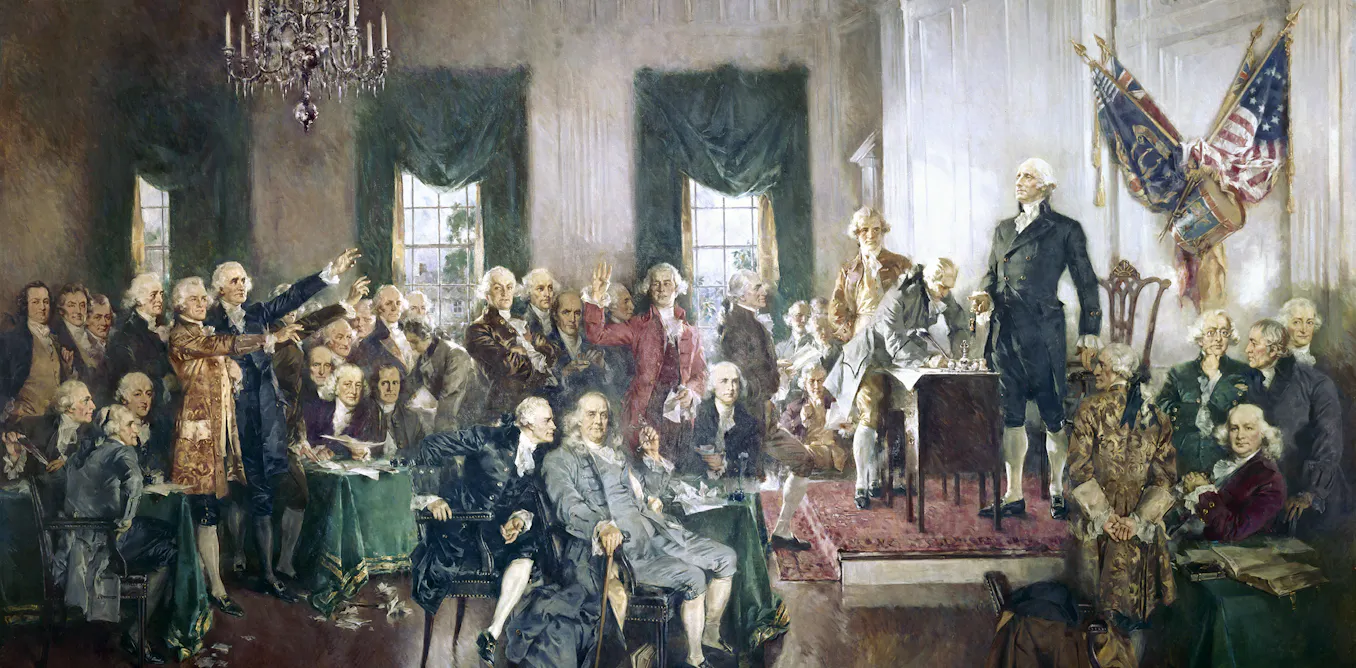
French political theorist Baron de Montesquieu exerted profound influence on America's founding architects, yet his contributions remain largely absent from contemporary political discourse. His concept of the separation of powers became foundational to the Constitution, but his warnings about democratic fragility carry equal weight today.
Montesquieu argued that republics depend on civic virtue and mutual respect among citizens. He cautioned that democracies face a particular peril: what he termed the "tyranny of opinion." This occurs when public pressure and social conformity become so intense that dissent becomes impossible. Citizens self-censor. Minority views face crushing social penalties. The marketplace of ideas collapses even without government censorship.
The founding generation absorbed this teaching. James Madison, Alexander Hamilton, and Thomas Jefferson drew on Montesquieu's framework when designing institutions meant to preserve space for competing viewpoints. They created checks and balances partly to prevent any faction from dominating through sheer force of opinion.
The contemporary relevance proves striking. America's current political landscape exhibits classic symptoms of Montesquieu's concern. Partisan polarization has intensified. Social media algorithms amplify outrage. Cancel culture punishes heterodox views with professional and social consequences. Centrist positions face attack from both ideological flanks. Many Americans report self-censoring political opinions out of fear.
What makes this troubling through a Montesquieuian lens is that formal constitutional protections remain intact. The First Amendment still protects political speech. The courts still function. Congress still convenes. Yet the informal mechanisms that Montesquieu identified as essential to republican health have deteriorated.
The 250th anniversary of American independence offers an occasion to revisit Montesquieu's full legacy. His separation of powers doctrine gets regular scholarly attention. His warnings about the tyranny of opinion deserve equal reconsideration. A