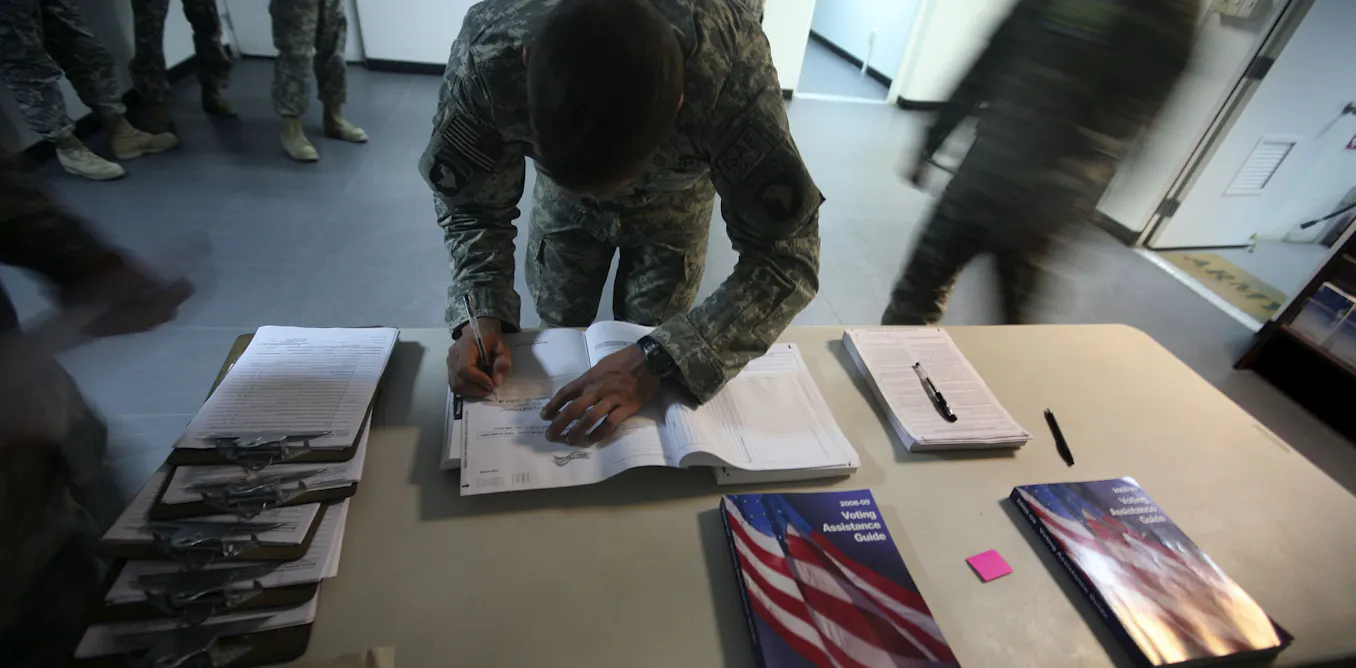
The Supreme Court's recent mail-in ballot decision carries direct lineage to the Civil War era, when military personnel first gained the right to vote by mail from distant battlefields. That historical foundation shaped the Court's modern ruling on voting access.
During the 1860s, mail-in voting emerged as a practical necessity to allow soldiers fighting the Civil War to participate in elections without returning home. The system proved essential for military participation in democracy. This precedent remained embedded in American voting law for generations.
The Court's current stance on mail-in voting reflects this military voting legacy. Justices considered the historical importance of allowing voters outside their home districts to cast ballots, a principle originally designed for armed forces personnel. Military voters remain a key constituency in this debate, as active-duty service members stationed overseas still rely heavily on mail-in voting systems.
The decision balanced competing interests between expanding voting access and election security. Justices pointed to the long-standing military mail-in voting framework as evidence that such systems could function reliably. The military's administrative machinery for handling absentee ballots provided a working model for broader mail-in voting policies.
This historical context influenced how the Court approached state-level variations in mail-in voting rules. Rather than invalidating existing practices entirely, the decision preserved the underlying principle that American voters living or serving abroad deserve reliable voting mechanisms. Military personnel serving overseas cannot easily return to polling places, making mail-in voting functionally necessary rather than merely convenient.
The ruling acknowledges that voting access and election administration have coexisted since the Civil War era. Military voters proved that remote voting could work systematically. That proven track record informed the Court's judgment on contemporary mail-in voting policies, treating military voters not as a special interest but as foundational to understanding American voting rights.