# Congressman's Beating of Senator Exposed Nation's Free Speech Limits
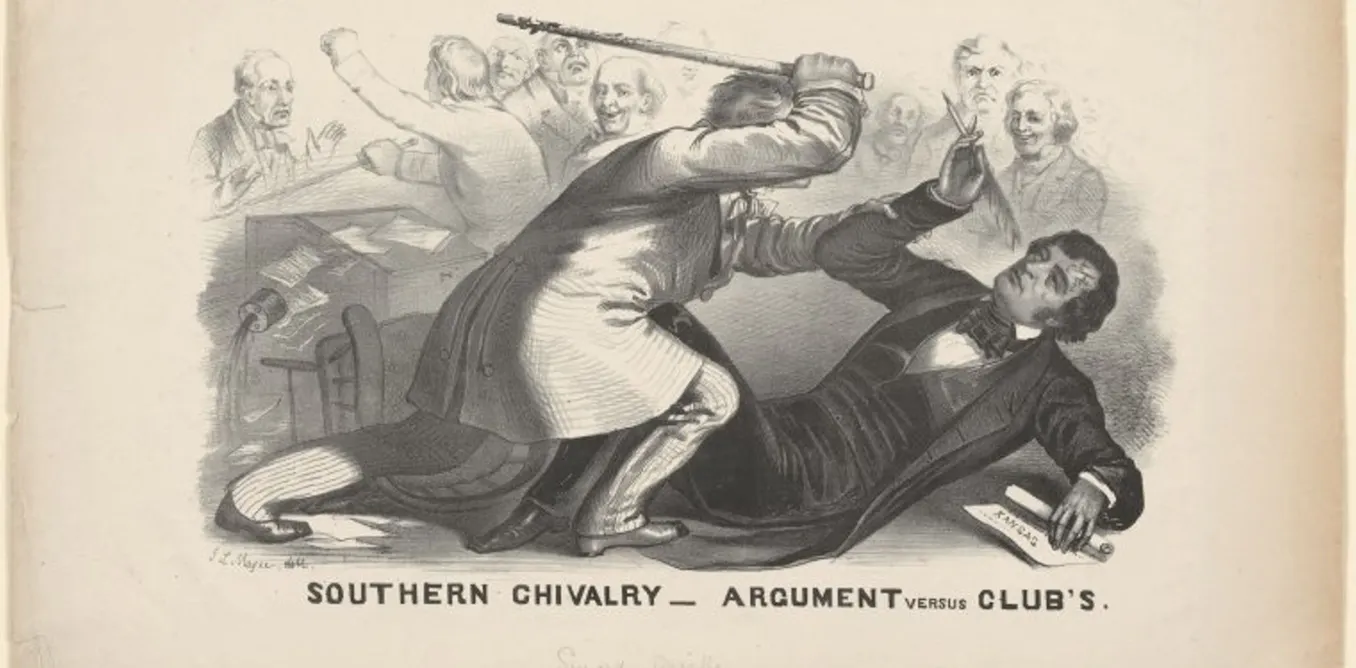
In 1856, Rep. Preston Brooks of South Carolina beat Sen. Charles Sumner of Massachusetts unconscious on the Senate floor. Brooks attacked Sumner after the senator delivered a fiery speech condemning slavery and personally attacking Brooks' cousin, Sen. Andrew Butler of South Carolina.
The assault triggered a national reckoning over free speech protections and their boundaries. Sumner had exercised his right to speak forcefully against slavery, yet his words provoked a violent response that the attacker faced minimal consequences for committing.
The incident revealed deep regional fractures. Southern lawmakers largely defended Brooks, viewing Sumner's remarks as inflammatory provocations that warranted physical retaliation. Northern abolitionists condemned both the violence and Southern unwillingness to punish it. Brooks initially faced censure but retained his seat.
The beating raised fundamental questions about speech and safety that persist today. When does controversial speech cross into incitement? What accountability should speakers and listeners face for their words and reactions? The caning of Sumner demonstrated that free speech rights exist within contested limits shaped by politics, region, and power.
Sumner recovered from his injuries but suffered lasting physical effects. He returned to the Senate as a hero to abolitionists, while Brooks became a symbol of Southern aggression to Northern audiences. The episode accelerated sectional tensions that contributed to the Civil War breaking out five years later.
The Sumner-Brooks clash remains a touchstone for debates about political discourse norms. It shows how speech and violence intertwine in ways that complicate simple defenses of unlimited free expression. The nation confronted the reality that speech operates within a political context where rhetoric can spark dangerous reactions, yet suppressing speech creates its own hazards.