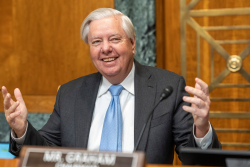
Lindsey Graham stands as one of the Senate's most paradoxical figures, a Republican whose influence extends far beyond South Carolina but whose positions have shifted dramatically over two decades of service.
Graham entered the Senate in 2003 as a hawkish conservative who championed military interventions and supported President George W. Bush's Iraq War. He built a reputation as a serious defense hawk and foreign policy voice, earning respect across the aisle through his work on detainee treatment and military policy. His maverick streak emerged early, particularly when he broke with party orthodoxy on immigration reform, occasionally partnering with Democrats on bipartisan solutions.
The 2016 presidential race marked a turning point. Graham initially competed for the Republican nomination before endorsing eventual winner Donald Trump, despite earlier harsh criticism. This pivot set the pattern for much of his subsequent career. Following Trump's election, Graham transformed into one of the former president's closest Senate allies, a departure from critics who noted his earlier skeptical stances.
The January 6 Capitol riot and Trump's subsequent impeachment trials tested Graham's balancing act. He voted to acquit Trump both times, frustrating Democrats and some Republicans who expected a breaking point. Yet Graham maintained enough independence to occasionally criticize Trump's actions while remaining fundamentally aligned with him.
Graham's influence peaked during his time as Judiciary Committee chairman from 2019 to 2021, where he shaped judicial confirmation battles and steered party messaging. His approach combined institutional power with media savvy, making him a frequent cable news presence.
His foreign policy positions have also evolved. While maintaining his hawkish instincts, Graham adapted to Trump's isolationist impulses, then shifted again under President Biden, resuming calls for stronger support to Ukraine and Japan against Russian and Chinese threats.
Graham represents modern Senate power defined less by principle than by strategic positioning. His career demonstrates how individual senators can