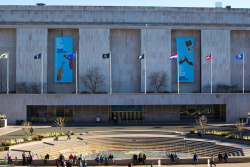
The Trump administration's Domestic Policy Council released a report attacking the Smithsonian Institution's National Museum of American History for alleged gaps in how it presents American narratives. The critique, contained in the "Saving America's Story" report, claims the museum omits key aspects of U.S. history while overemphasizing others.
An analysis of the report reveals fundamental factual errors. The document makes assertions about what the museum fails to display that contradict what actually hangs on its walls and sits in its galleries. The report targets specific content and curatorial decisions, yet those elements already exist within the museum's exhibitions.
The White House attack focuses partly on museum leadership. The administration objects to decisions made by those overseeing the institution's direction and content strategy. This reflects deeper disagreement over how American history should be presented to the public.
The controversy centers on cultural and political narratives. The Trump administration argues the museum inadequately represents certain aspects of American achievement and national identity. Critics counter that the report cherry-picks complaints while ignoring the museum's actual scope and breadth.
The Smithsonian Institution operates as an independent establishment agency funded by Congress. Its museums face recurring pressure from different administrations over content decisions. Republican criticism of cultural institutions over historical interpretation has intensified in recent years, often focusing on how museums present race, slavery, and social movements.
The "Saving America's Story" report represents an official attempt to influence how taxpayer-funded institutions tell American history. Museums operate under stated commitments to scholarly accuracy and balanced presentation. The White House critique suggests those standards conflict with how the administration believes history should be displayed.
The dispute underscores broader debates about how public institutions shape historical understanding. Museums serve education and preservation functions, while facing legitimate questions about curatorial choices. Whether the Trump administration's specific complaints hold up to scrutiny remains central to evaluating the report's credibility and its implications for