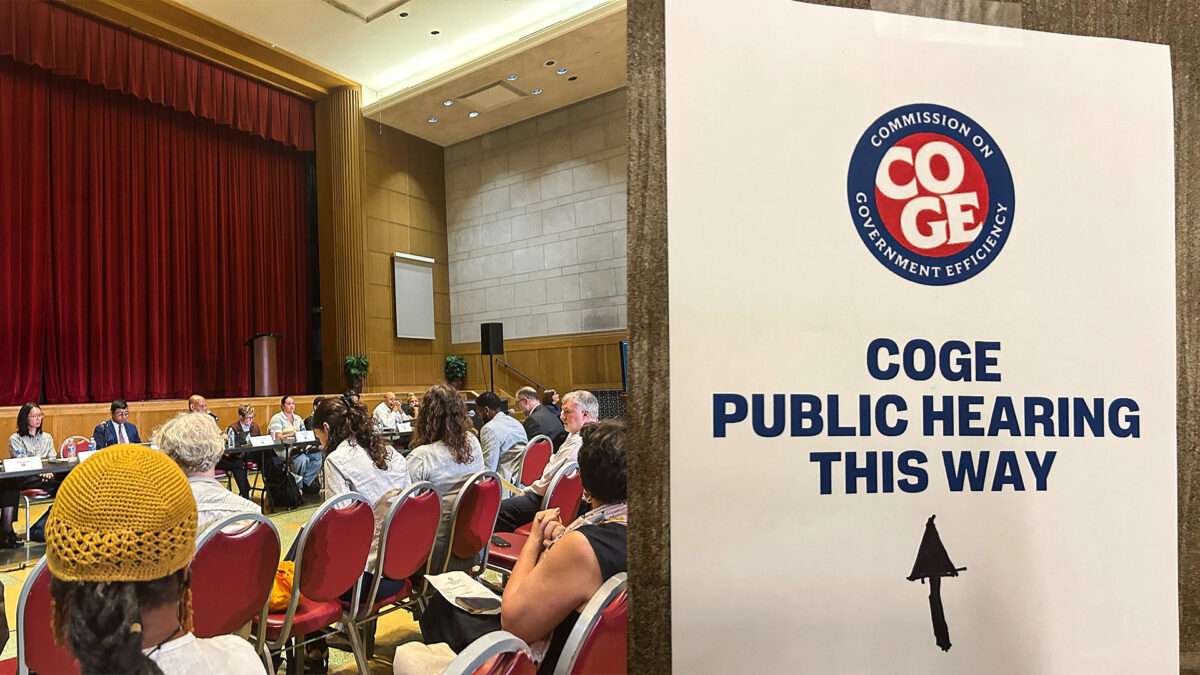
Zohran Mamdani chairs the Commission on Government Efficiency, a body tasked with identifying waste and redundancy across federal agencies. The commission held meetings recently to assess how the government can reduce administrative overhead and streamline operations.
Reason's coverage suggests the commission itself exemplifies the bureaucratic inefficiency it aims to fix. The outlet notes that the body operates through typical governmental processes that slow action and diffuse accountability. Mamdani leads the effort, but the structural constraints of interagency coordination and consensus-building limit what the commission can realistically accomplish.
The core problem runs deeper than one commission's operations. Government efficiency initiatives often struggle because they lack enforcement power or face entrenched resistance from agencies protecting their budgets and jurisdictions. Federal agencies have institutional reasons to maintain existing structures, and pushing reform requires political capital that commissioners may not possess.
Mamdani's commission reflects a recurring pattern in Washington. Policymakers create task forces and working groups to address systemic problems, but these bodies frequently produce recommendations that gather dust rather than drive change. Without direct legislative authority or executive backing to implement findings, even well-intentioned efficiency efforts become talking shops.
The skepticism toward Mamdani's commission reflects broader questions about governmental reform. Past efficiency drives have yielded modest results at best. The Treasury Department, Office of Management and Budget, and various congressional committees have all attempted sweeping reorganizations with mixed success. Real reform requires sustained political will from both the executive and legislative branches, not just bureaucratic machinery examining itself.
That said, the commission's work could still identify concrete waste that higher-ranking officials might target. If Mamdani's team documents specific inefficiencies with actionable recommendations, leadership could use those findings to justify cuts or reorganizations. The commission matters less for its inherent power than for whether it produces analysis that politicians find useful when making budget decisions.