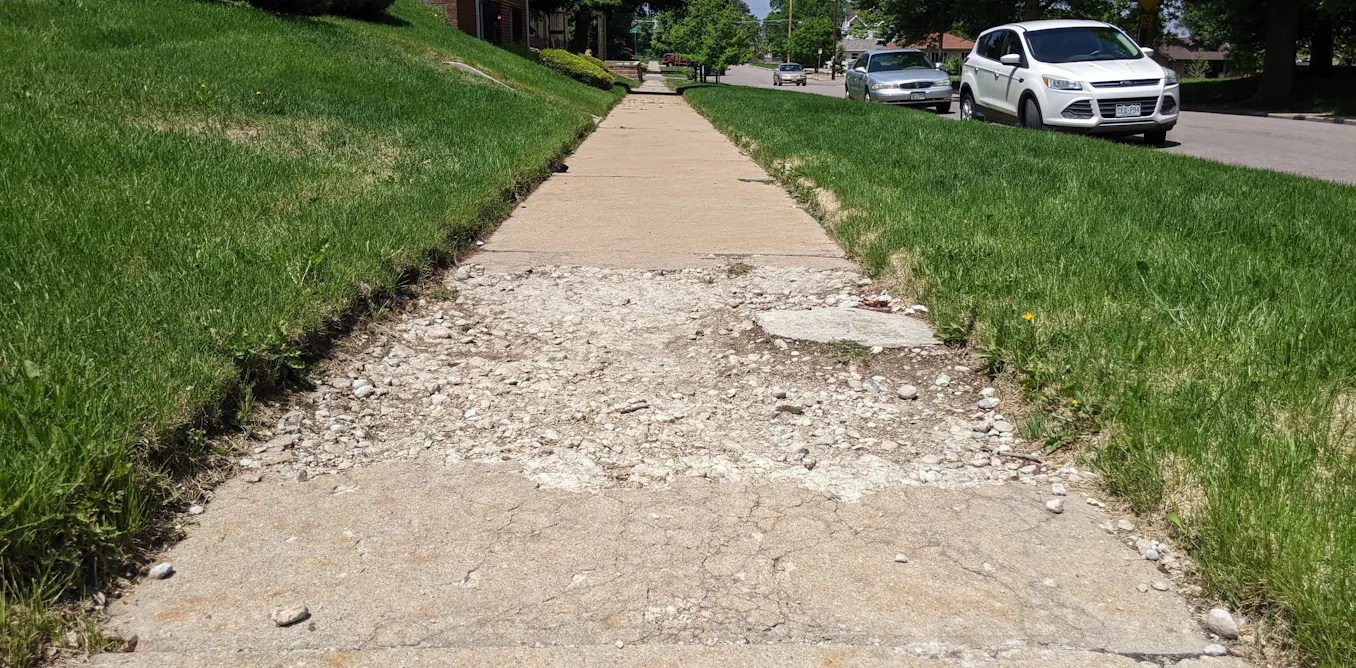
Denver passed new legislation establishing a municipal sidewalk program that shifts responsibility for sidewalk construction and maintenance from property owners to the city government. Previously, Denver homeowners bore the financial and logistical burden of repairing adjacent sidewalks, creating inconsistent infrastructure quality and leaving many residents unable to afford repairs.
The city's approach addresses a structural problem affecting municipalities nationwide. Property owners in many jurisdictions face unexpected repair costs ranging from hundreds to thousands of dollars for sidewalk damage caused by tree roots, weather, and aging infrastructure. This system disproportionately impacts lower-income residents who cannot absorb these expenses, resulting in deteriorating public pathways and accessibility issues for pedestrians using wheelchairs or walkers.
Denver's legislation centralizes sidewalk maintenance under city control, ensuring consistent funding and professional management. The program covers construction, repair, and ongoing upkeep of sidewalk networks. This approach removes the compliance burden from individual homeowners and creates predictable municipal budgeting for infrastructure.
The policy shift reflects growing recognition among city planners that sidewalks constitute essential public infrastructure rather than private property maintenance. Well-maintained sidewalks improve pedestrian safety, reduce liability disputes, and support economic activity in commercial districts. Cities including San Francisco and Portland have adopted similar municipal sidewalk programs in recent years.
For Denver specifically, the legislation establishes equitable access to basic pedestrian infrastructure. Homeowners no longer face surprise repair bills that can strain household budgets. The city assumes long-term responsibility for asset management, applying consistent standards across neighborhoods.
Other municipalities considering sidewalk reform can adopt Denver's model. Dedicated funding mechanisms prove essential for program success. Cities must also establish clear maintenance schedules and prioritization systems for repairs. Denver's experience demonstrates that treating sidewalks as public infrastructure rather than private responsibility produces superior outcomes for urban mobility, equity, and public health.