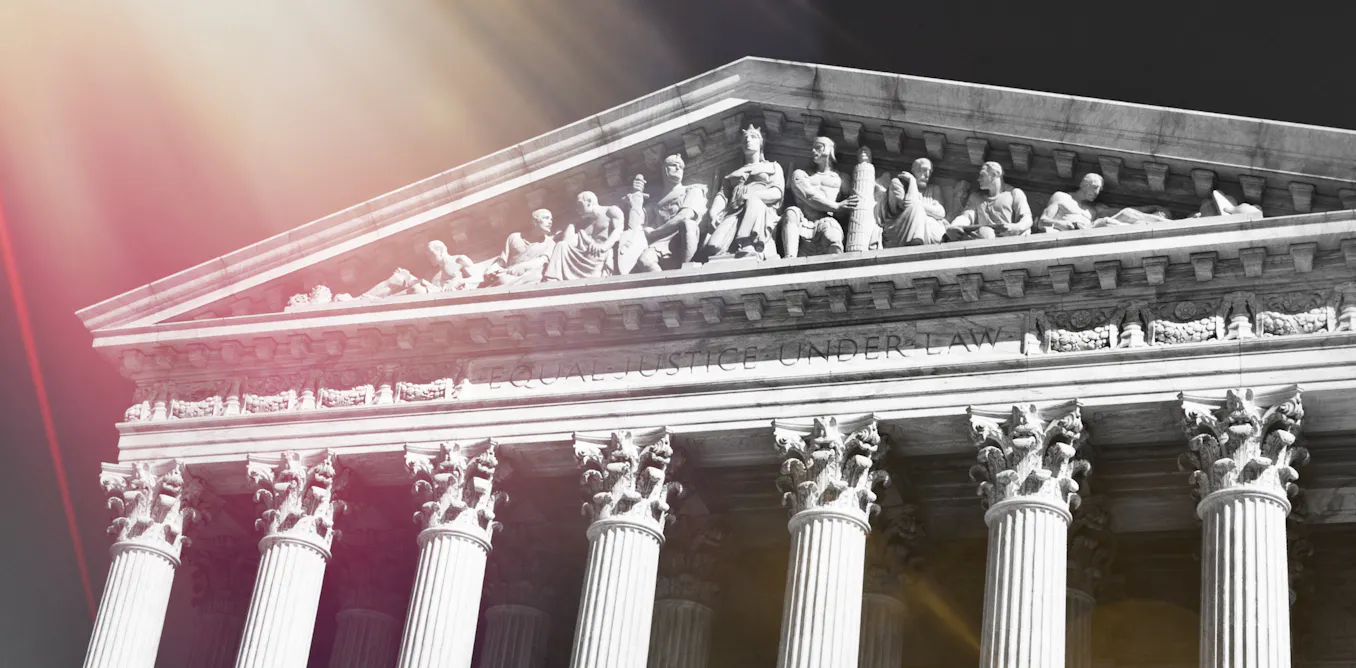
# Former Federal Judge Reflects on Supreme Court's Consequential Term
A former federal judge has assessed the Supreme Court's recent term, highlighting both landmark rulings and troubling trends in how justices communicate with one another.
The term produced decisions with far-reaching consequences across major policy areas. The Court addressed fundamental questions about voting rights, reproductive rights, and the scope of federal regulatory authority. These rulings reshaped the legal landscape in ways that will affect millions of Americans for years.
The former judge noted a concerning shift in tone among the justices. The opinions reveal increasingly sharp rhetoric between the Court's ideological wings, with conservative and liberal justices trading pointed critiques rather than engaging in respectful legal debate. This judicial invective appears in majority opinions, concurrences, and dissents alike, suggesting deeper fractures on the bench than in previous terms.
Despite these divisions, the former judge offered praise for the quality of legal writing in certain opinions. Some justices crafted particularly clear and compelling arguments, demonstrating that excellent judicial craftsmanship remains possible even amid contentious disagreement. This technical excellence matters because clear reasoning enhances public confidence in the Court's work.
The judge concluded that the Court ultimately fulfilled its constitutional function. Regardless of whether one agrees with specific outcomes, the institution performed its essential duty to resolve legal disputes and interpret the Constitution. The term's numerous 5-4 and 6-3 decisions reflect real judicial disagreement about constitutional meaning, not institutional failure.
The assessment offers a measured perspective from someone with judicial experience. While acknowledging the Court's deep ideological divisions, the former judge resists the view that the institution has broken down entirely. The Court continues operating, issuing reasoned opinions, and providing legal resolution to major questions. That functionality matters even when Americans disagree sharply with the results.