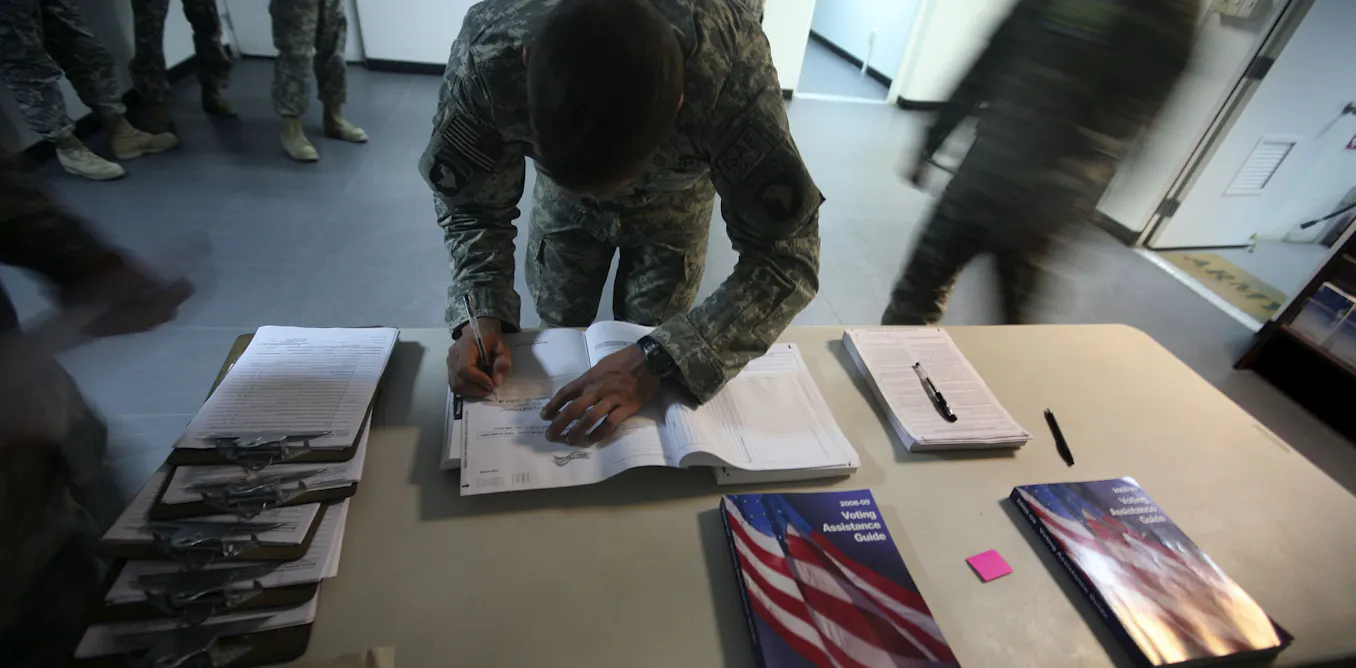
The Supreme Court's recent decision on mail-in voting carries deep historical roots tied to military service. Mail-in voting itself emerged from the Civil War era, when soldiers needed the ability to cast ballots while deployed away from their home states. That foundational purpose shaped the Court's reasoning in its latest ruling on ballot access.
The justices referenced the military voting precedent when deciding how states could handle mail-in ballots. The original intent behind absentee voting for servicemembers created a legal framework that extended to civilian voters over time. The Court acknowledged this history in its analysis, recognizing that accommodating distant voters served a legitimate governmental interest.
Military personnel remain central to mail-in voting debates. Active duty service members stationed overseas, National Guard members deployed domestically, and veterans all depend on absentee ballot systems to exercise voting rights. Election administrators must balance ballot security with the practical reality that many military voters cannot appear in person.
The Supreme Court's decision reflects tensions between ballot access and election integrity. Conservative justices emphasized state authority to set voting rules, while liberals pushed for expanded mail-in access. The military voting history provided common ground, as both sides acknowledged soldiers deserved ballot access.
States now manage mail-in systems with military voters as a core constituency. Some states offer longer periods for absentee ballots or waived witness requirements for overseas military personnel. Election officials coordinate with the Department of Defense to ensure ballots reach deployed troops in time for voting deadlines.
The ruling affects how states can restrict mail-in voting overall. By grounding its decision in the military voting tradition, the Court created limits on how far states could go in tightening ballot access rules. The decision reflects judicial recognition that historical voting practices, forged in wartime, maintain relevance for modern electoral systems.
Military voting remains a bipartisan commitment. Democrats and Republicans both support ensuring servicemembers can participate in elections. The Supreme