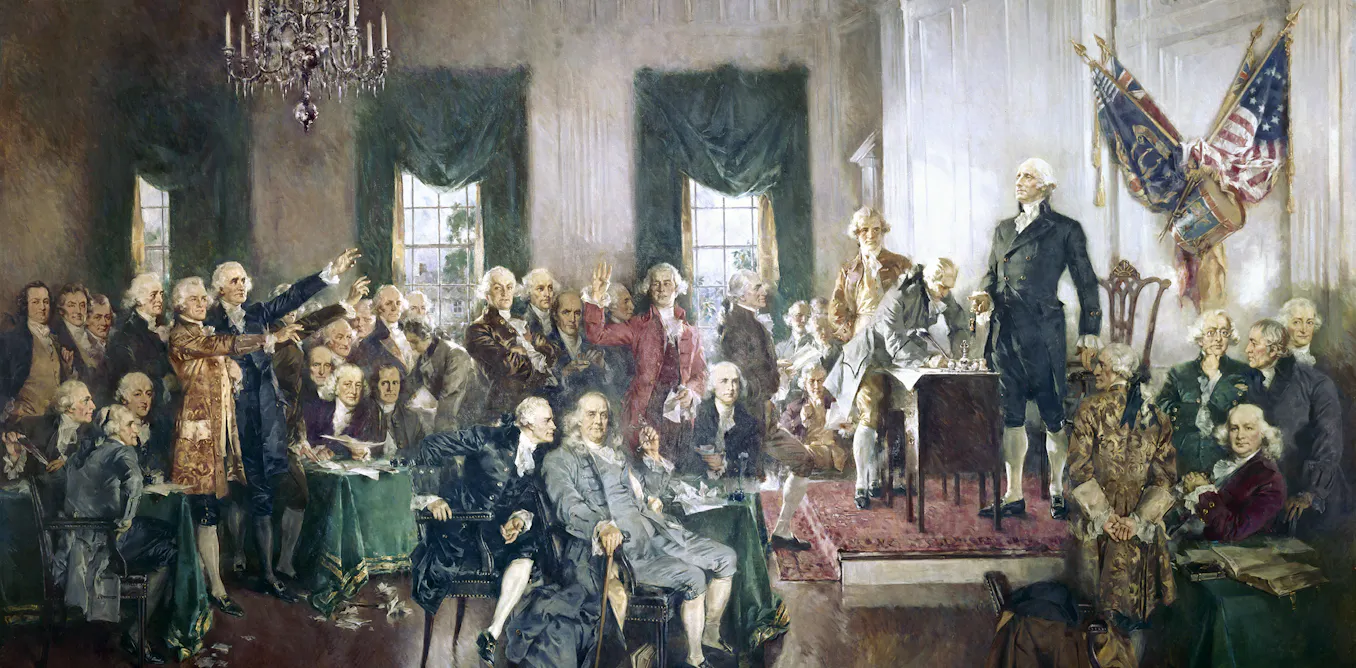
Montesquieu, the 18th-century French political theorist, exercised outsized influence on American founding ideals yet remains largely absent from modern political discourse. His concept of separating governmental powers directly shaped the Constitution's structure. Less known is his prescient warning about "tyranny of opinion" — the danger that public sentiment could overwhelm individual liberty and minority rights.
As the United States marks its 250th anniversary, Montesquieu's framework illuminates current political dysfunction. The founding generation studied his work intensively. James Madison, Alexander Hamilton, and other architects of American governance drew directly from Montesquieu's "The Spirit of the Laws" to design institutional checks against concentrated power.
Yet his warnings about opinion tyranny resonate more urgently now than perhaps at any point since the founding. Montesquieu understood that democracies could suppress dissent through social pressure and conformity rather than government force. Citizens could police each other's thoughts and speech. Minority viewpoints could face systematic exclusion not through law but through collective social punishment.
Contemporary polarization reflects precisely this dynamic. Cable news cycles, social media algorithms, and partisan sorting create echo chambers where deviation from orthodoxy brings swift social or professional consequences. The mechanism is democratic but the effect is authoritarian.
Montesquieu also emphasized that republics require virtue — shared civic commitment transcending party interest. That foundation has eroded substantially. Political tribalism now dominates deliberation. Compromise registers as betrayal. The capacity to hear opposing views without treating them as existential threats has diminished.
Recovering Montesquieu's insights offers no quick fix to polarization. His vision demands that Americans rebuild institutional protections, yes, but also cultivate intellectual humility and social tolerance. The separation of powers alone cannot contain tyranny of opinion.
Understanding this French theorist's actual contributions, rather than the sanit