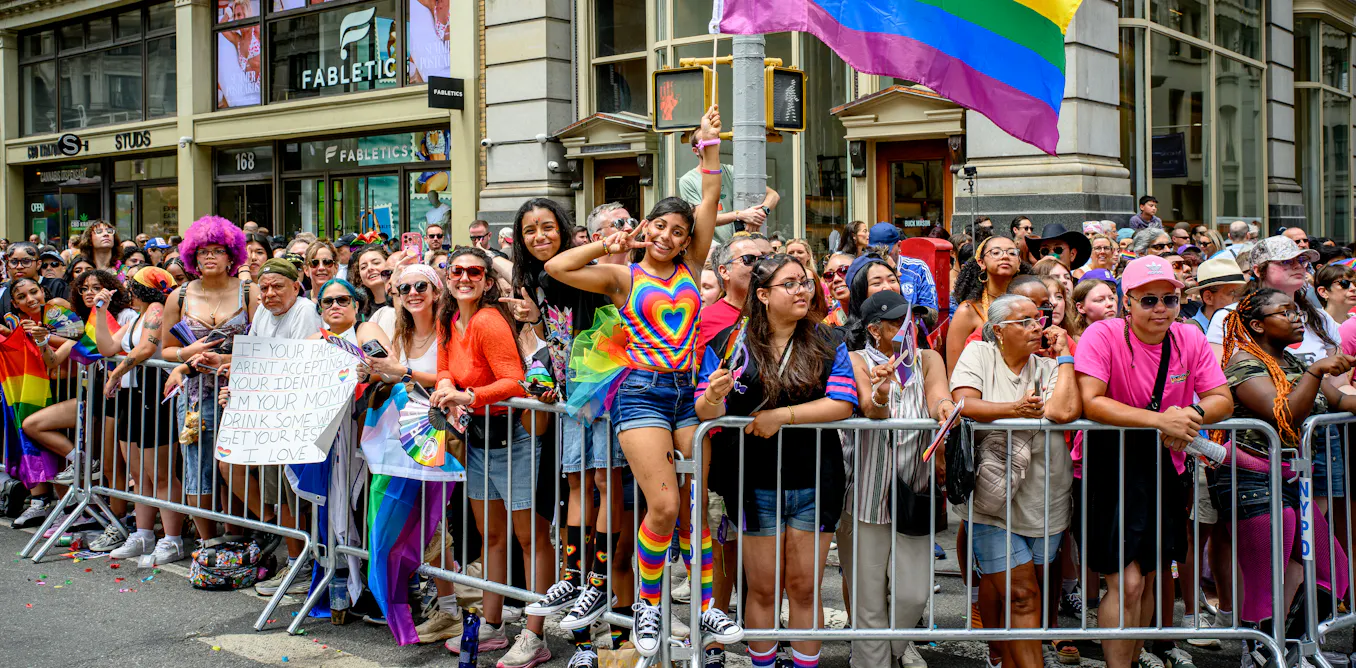
Young women increasingly identify outside strict heterosexual categories, while young men maintain more traditional sexual orientations, revealing a gender gap in how Americans approach sexual identity.
Recent data shows women ages 18 to 24 report less exclusive heterosexual identification than previous generations. Many describe themselves as bisexual, asexual, or simply "not straight," reflecting broader cultural shifts toward fluidity. Young men in the same age range show no comparable trend. The overwhelming majority still identify as exclusively heterosexual.
This divergence reflects deeper cultural forces. Women face less social penalty for exploring non-heterosexual identity. Cultural messaging, social media, and peer communities have normalized women questioning their sexuality. The LGBTQ+ movement itself has created visible pathways for female self-expression outside traditional categories.
Young men face different constraints. Rigid expectations around masculinity persist despite broader social change. Men who question their heterosexuality risk stigma and social ostracism in ways women often do not. Traditional masculinity—defined partly through exclusive heterosexual attraction—remains a narrow target that many men feel compelled to hit.
The politics here matter. Conservative movements often frame sexual fluidity as a threat to traditional society, while progressive spaces celebrate it as liberation. Yet the gendered nature of this shift complicates simple political narratives. It suggests that cultural acceptance of non-heterosexual identity depends less on official policy change and more on whether people face genuine social consequences for deviation.
For policymakers, this gap underscores how gender shapes the lived experience of sexual identity. Policies protecting LGBTQ+ rights address legal discrimination, but they cannot erase the informal social pressures that keep many men locked into rigid identity categories. The uneven distribution of freedom to explore sexuality across gender lines reveals how traditional masculinity functions as its own enforcement mechanism, independent of law.