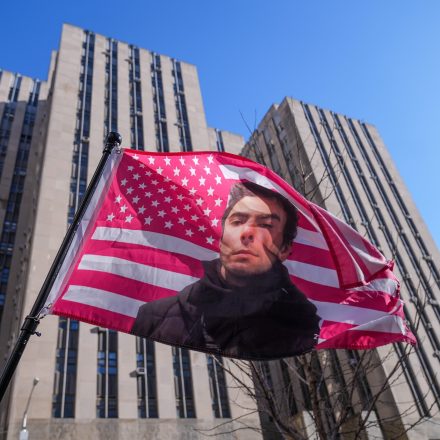
Immigration and Customs Enforcement continues to arrest immigrants at New York courthouses despite a federal judge's order prohibiting the practice, according to Rep. Dan Goldman. The New York Democrat stated that ICE is "flagrantly violating the law" by detaining people who appear for mandatory court hearings.
The arrests undermine judicial proceedings and discourage immigrants from attending required appearances, which could destabilize the immigration court system. When enforcement agents operate at courthouses, immigrants may skip hearings to avoid detention, leaving cases unresolved and clogging an already backlogged system.
Goldman's criticism reflects broader tension between the judiciary and immigration enforcement. Federal judges have issued orders protecting courthouse spaces as neutral grounds where people can seek legal remedies without fear of immediate arrest. This principle recognizes that functioning courts require public trust and attendance.
ICE's defiance signals a breakdown in institutional compliance. When an executive agency ignores judicial directives, it raises separation-of-powers concerns and questions about rule of law. The agency operates under the Department of Homeland Security, which sets enforcement priorities, but those priorities cannot override court orders.
New York's courthouses have become flashpoints in this conflict. State and local officials have repeatedly protested ICE operations inside judicial buildings, arguing they interfere with court operations and violate long-standing protocols. Immigration advocates warn that courthouse arrests create a chilling effect, deterring immigrants from pursuing legitimate legal claims including asylum applications.
The pattern of arrests despite judicial orders suggests either insufficient oversight of ICE field operations or deliberate resistance to court authority. Either scenario presents governance challenges. Federal judges lack direct enforcement mechanisms against agencies, forcing them to rely on compliance or to escalate through contempt proceedings and additional sanctions.
This situation will likely draw legislative attention. Congress controls ICE's funding and can impose conditions on courthouse operations. Goldman's public statement indicates congressional Democrats plan to pressure the agency to respect judicial authority