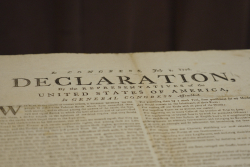
This framing presents a false binary between American founding principles and communist ideology, collapsing complex political debates into a stark civilizational choice. The comparison invokes the Declaration of Independence, which emphasizes individual rights and limited government, against Marx and Engels' Communist Manifesto, which calls for collective ownership and class revolution.
The rhetorical device serves partisan purposes. By positioning contemporary policy disagreements as battles between "freedom" and "submission," this framing bypasses substantive debate over taxation, regulation, social programs, or government scope. It assigns motivations rather than engaging with actual policy proposals.
American political discourse regularly deploys this comparison. Conservatives invoke it to oppose Democratic policies on healthcare, redistribution, and labor organizing. They argue progressive taxation or social insurance represents communist ideology creeping into democratic systems. Liberals counter that robust social safety nets strengthen democracy rather than undermine it, pointing to European democracies that combine capitalism with generous public services.
The Declaration-versus-Manifesto framing ignores reality. No major U.S. political party advocates communist revolution or abolishing private property. The Democratic Party operates within capitalist frameworks, proposing regulatory adjustments and wealth redistribution through democratic processes. Republicans defend lower taxation and fewer regulations but accept Social Security and Medicare.
This rhetorical strategy also obscures historical context. The Declaration emerged from Enlightenment philosophy emphasizing natural rights. The Manifesto responded to 19th-century industrial capitalism. Both reflect their eras. Neither directly addresses 21st-century debates about pharmaceutical pricing, student debt, climate regulation, or tax policy.
Voters benefit from specific policy analysis rather than civilizational ultimatums. Should marginal tax rates rise? Should labor organizing receive legal protections? Should government fund healthcare? These deserve detailed discussion of tradeoffs, not declarations that one answer leads to totalitarianism while the other preserves civilization.