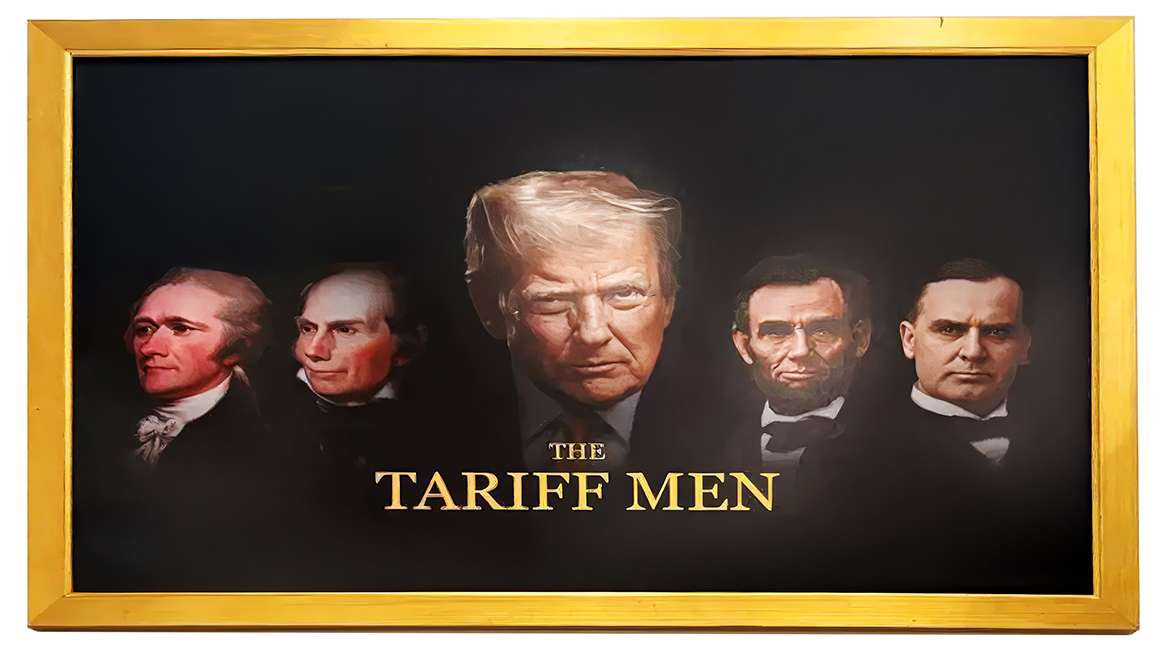
President Trump has invoked the Founding Fathers as historical supporters of protectionism and tariffs, framing free trade as contrary to American founding principles. This claim centers on a painting now displayed in the Trump White House that portrays early American leaders as "tariff men."
The historical record tells a different story. While the early United States did impose tariffs, the architects of American independence and the Constitution were fundamentally committed to free trade principles. Alexander Hamilton, often cited by protectionists, advocated for temporary tariffs to protect infant industries, not permanent trade barriers. His vision involved strategic, limited protection, not sweeping protectionist policy.
The Founding Fathers broadly embraced classical liberal economics. James Madison, Thomas Jefferson, and other framers feared trade restrictions would invite retaliation, stifle commerce, and reduce consumer choice. Jefferson famously opposed what he saw as mercantilist excess. The Constitution itself limits states' power to impose tariffs, reflecting the founders' skepticism of trade barriers.
Early American tariffs arose partly from fiscal necessity. The new nation needed revenue to service debt and operate government. These were pragmatic measures, not ideological statements about rejecting free trade. As the nation's finances improved, so did support for lower tariffs.
Trump's characterization misrepresents the philosophical commitments of Washington, Jefferson, Hamilton, and Madison. They disagreed on many issues but shared an Enlightenment faith in the benefits of commerce and exchange. Some protectionist sentiment existed in early America, particularly among manufacturers, but it never defined the founding vision.
The invocation of the Founding Fathers to support modern protectionism reflects selective history. While early American leaders accepted tariffs as tools, they rejected the core protectionist argument that trade with foreign nations inherently harms domestic interests. Contemporary debates over trade policy merit serious discussion on economic grounds, but attributing prot