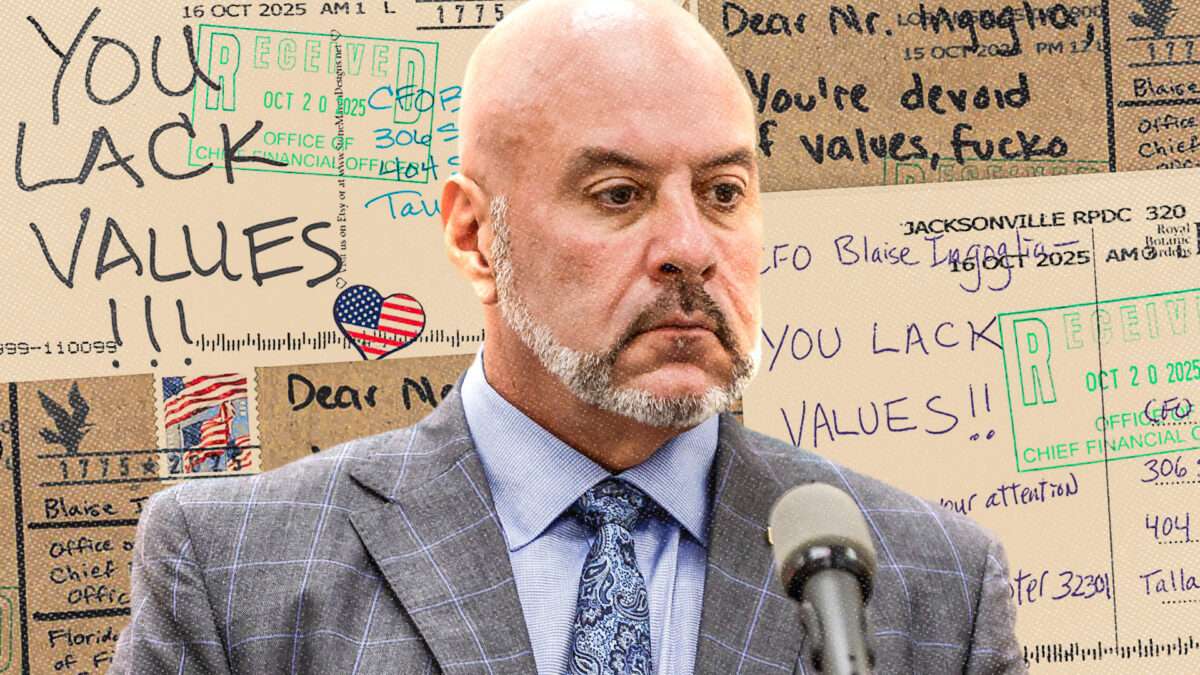
A 77-year-old Florida veteran faces a threat investigation after sending a postcard to Chief Financial Officer Jimmy Patronis that read "You lack values." State officials treated the unsigned message as a potential security threat, triggering a formal inquiry by high-level authorities.
The incident reflects how law enforcement has expanded threat assessment protocols in ways that now capture routine political dissent. The veteran's postcard contained no violent language, no explicit threats, and no identifying information beyond a postmark. Yet authorities launched a full investigation into the sender's identity.
Patronis serves as Florida's CFO, an elected position overseeing the state's financial operations and managing the state pension system. His office initiated the investigation rather than dismissing the message as ordinary constituent criticism. The decision to escalate a generic critique into a threat investigation demonstrates how easily political speech can trigger law enforcement scrutiny.
The case raises questions about the threshold agencies use when determining what constitutes a genuine threat versus protected speech. A postcard telling an official they lack values expresses political judgment, not intent to harm. The First Amendment protects such criticism even when it targets government officials directly.
The veteran's age and military service add context to why authorities might have treated him as low-risk, yet they proceeded with the investigation regardless. This pattern occurs repeatedly across the country, where state and federal agencies investigate citizens for sending letters, postcards, or emails critical of elected officials.
Such investigations consume resources and create chilling effects on legitimate political expression. Citizens may self-censor rather than risk government scrutiny for simple criticism. The Florida case illustrates how threat assessment procedures, designed to identify genuine dangers, can transform minor acts of political speech into investigative matters.
The incident occurred in a state where political tensions remain high and where election security has drawn intense focus. Nevertheless, treating a postcard critique as a threat represents an overreach that conflates speech with danger.