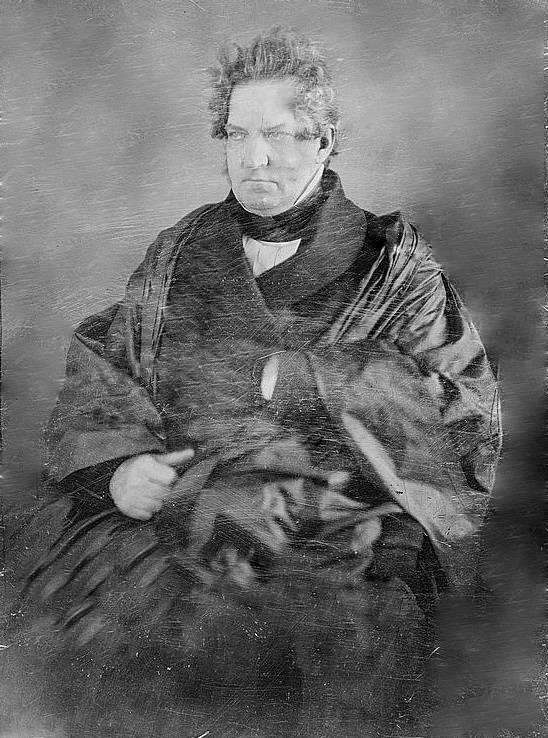
Justice James Wayne of Georgia died on July 5, 1867, ending a 32-year tenure on the Supreme Court that spanned some of the nation's most turbulent decades. Wayne served from 1835 until his death, witnessing the Court's role in slavery disputes, sectional conflict, and the Civil War itself.
Wayne proved a complex figure in American judicial history. A southerner who owned slaves, he nonetheless remained on the bench throughout the Civil War and Reconstruction era, refusing to resign despite Georgia's secession. He participated in landmark cases including the Cherokee removal cases and contributed to the Court's jurisprudence on federal commerce power.
His death came during the Reconstruction period when Congress was asserting control over southern states and the Supreme Court itself faced questions about its institutional authority. At 79, Wayne had become one of the Court's elder statesmen. His departure created a vacancy that President Andrew Johnson would seek to fill, though Congress then held significant power over Court appointments during Reconstruction.
Wayne's long service reflected a different era of American jurisprudence. He had been appointed by President Andrew Jackson and brought to the bench during the early nineteenth-century debates over federalism and states' rights. His continued presence on the Court through the Civil War gave the institution some continuity during a period when the nation itself fractured.
The timing of his death, just two years after the war's end, marked a transition point. His successor would serve in a very different America, one grappling with Reconstruction policy and the meaning of the Thirteenth, Fourteenth, and Fifteenth Amendments. Wayne's absence from the bench removed a voice shaped by antebellum politics, even as the Court confronted postwar constitutional questions that would define American law for generations.