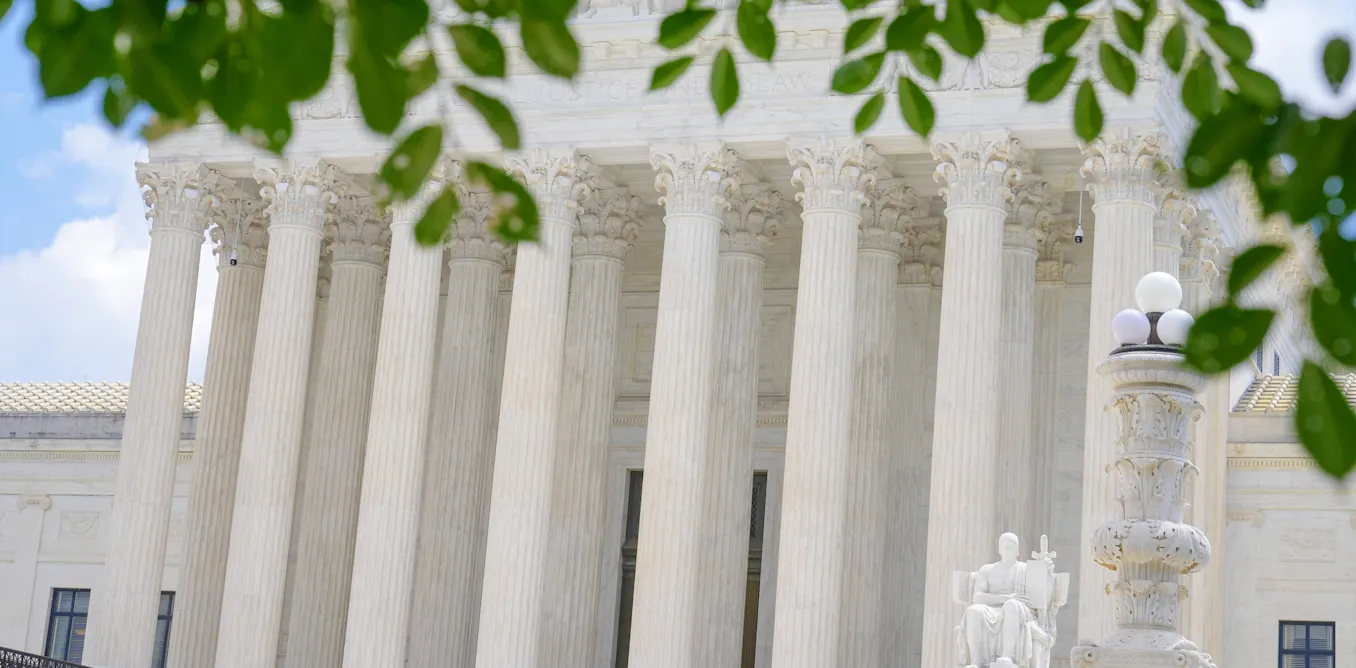
The Supreme Court rejected Donald Trump's challenge to birthright citizenship, reaffirming that all children born in the United States automatically become citizens regardless of their parents' immigration status.
The decision centered on the 14th Amendment's citizenship clause, which guarantees that all persons born in the country are citizens by birth. The justices grounded their reasoning in the Declaration of Independence's promise of equality, directly contradicting Trump's stated intent to eliminate birthright citizenship through executive action if he returns to office.
This ruling represents a forceful rebuke to Trump's immigration hardline. During his 2024 campaign, he pledged to end automatic citizenship for children of undocumented immigrants, calling it a loophole that incentivized illegal border crossings. The Court's decision blocks that path.
The citizenship clause has remained settled law since Reconstruction. The Court's invocation of the Declaration of Independence underscores the constitutional commitment to universal birthright citizenship as foundational to American identity and equal protection. The reasoning emphasizes that this provision exists independent of parental status or circumstances of birth.
Trump's attempted challenge rested on arguments that the 14th Amendment did not apply universally. The Court rejected this narrow reading, affirming the clause's plain language and historical intent. The decision carries particular weight given the current political climate around immigration enforcement and demographic concerns raised by Trump and his allies.
The ruling settles a legal question for now, though Trump maintains his campaign position. Congressional action would be required to alter birthright citizenship through constitutional amendment, a far higher bar than executive action. The Court's decision protects a foundational citizenship principle while denying the incoming administration a tool for reshaping immigration policy unilaterally.