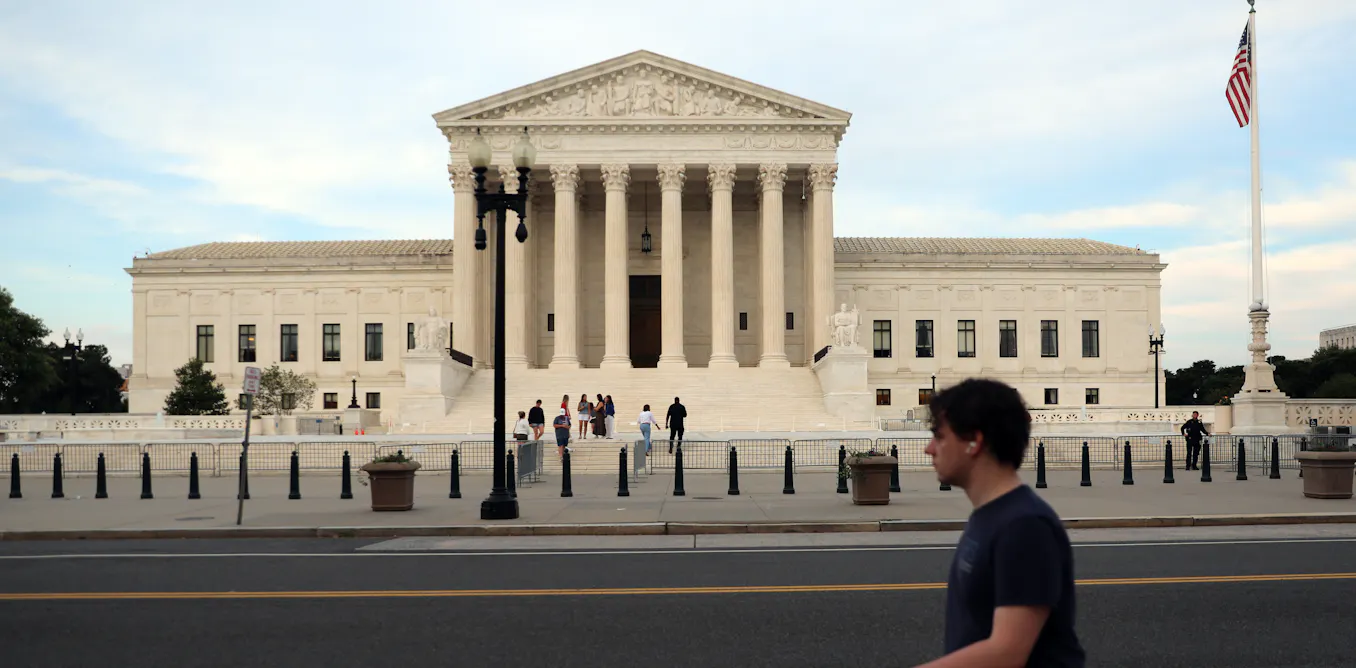
The Supreme Court issued two landmark rulings that reshape individual rights in America. First, the Court expanded protections for concealed carry gun holders, striking down restrictions on where people may legally transport firearms in public spaces. Second, the justices ruled in favor of casual drug users, limiting how aggressively law enforcement can prosecute those with minimal quantities of controlled substances.
The gun ruling represents another victory for Second Amendment advocates after the Court's 2022 decision in New York State Rifle and Pistol Association v. Bruen, which struck down New York's concealed carry licensing law. This latest decision further constrains states' ability to regulate where armed citizens can go, expanding gun rights beyond what many state legislatures intended.
The drug ruling, conversely, checks police power in narcotics enforcement. The decision restricts prosecutors' ability to treat minor drug possession as a serious felony, effectively protecting recreational users from harsh sentencing guidelines. Courts must now examine intent and quantity more carefully before applying maximum penalties.
These decisions appear contradictory on their surface. The same conservative majority that champions individual rights for gun owners also extends those rights to drug users. However, the Court's underlying principle remains consistent: it interprets the Constitution to protect individual liberty from government overreach, whether that overreach involves firearm restrictions or aggressive drug prosecution.
The rulings expose a philosophical divide on the Court. Conservative justices prioritize textual originalism, reading constitutional protections broadly when the founding-era evidence supports individual rights claims. Liberal justices argue both decisions create practical dangers—unrestricted guns in public spaces and weakened drug enforcement—but lack the votes to prevail.
These decisions will reshape state and local policy significantly. States must revise concealed carry permitting systems and prosecutorial guidelines. Law enforcement agencies face new constraints on narcotics cases. The rulings also signal the Court's direction for the next decade: expect further