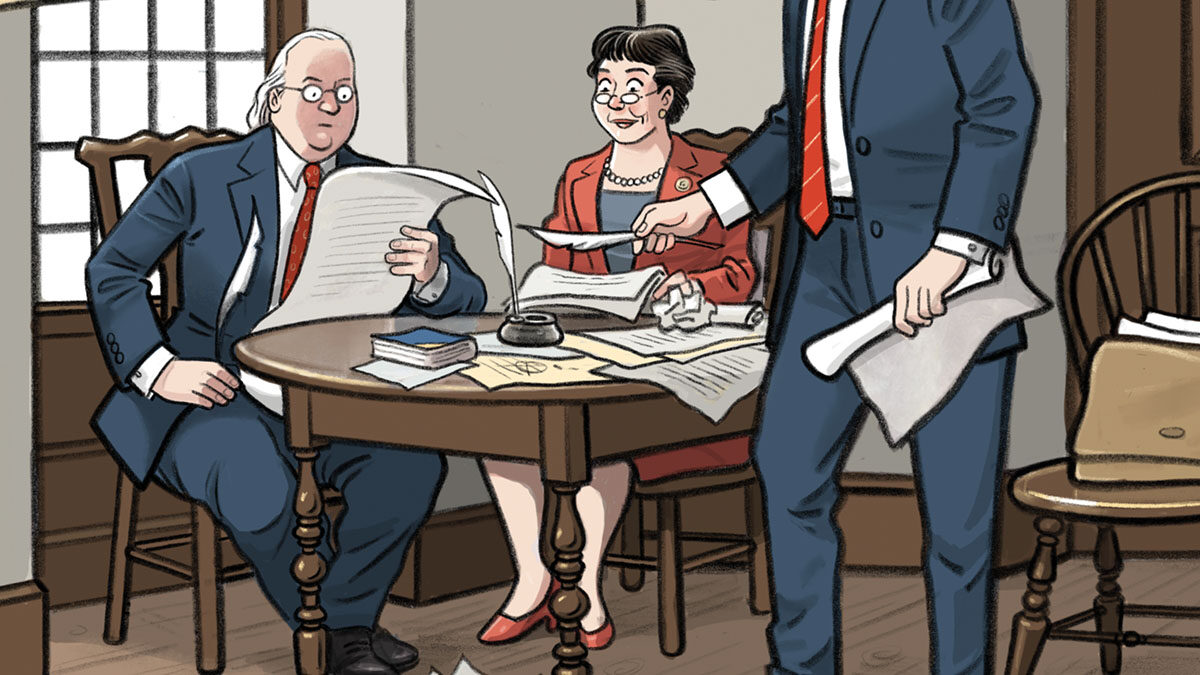
# Capitol Ink: Semiquincentennial Moment
Congress observed the 250th anniversary of American independence this week, marking a milestone that prompted reflection on the institution's role in the nation's founding and ongoing governance. The Capitol building itself, constructed over more than a century and first occupied in 1800, stands as a physical embodiment of legislative authority that has persisted through wars, constitutional crises, and fundamental shifts in American democracy.
The semiquincentennial observance comes amid broader debates about Congressional effectiveness and public trust in the institution. Lawmakers from both parties acknowledged the historical weight of the moment, though their remarks often diverged on how well the current Congress fulfills its constitutional obligations.
The Capitol has hosted pivotal moments across America's history. The 1865 second inaugural address of Abraham Lincoln, delivered on the Capitol steps, reframed the Civil War as a moral reckoning. The 1963 March on Washington, organized partly to pressure Congress on civil rights legislation, demonstrated how the building functions as a symbol of democratic aspiration and contested power.
Modern Congress operates under significant structural pressures. Polarization has intensified partisan divisions, while procedural changes have concentrated power in party leadership. The House of Representatives passed fewer bills in recent sessions compared to historical averages, and bipartisan cooperation on major legislation has become increasingly rare.
The semiquincentennial moment provides an opportunity for lawmakers to examine their institution's trajectory. Some members advocated for procedural reforms to restore regular order and encourage deliberation. Others emphasized the need for broader public engagement with Congress beyond election cycles.
The Capitol's architectural permanence contrasts sharply with the transience of individual legislators and administrations. That permanence, observers note, carries both symbolic weight and practical responsibility. The building endures; the policies Congress enacts shape generations of American life. The 250th anniversary marks not an endpoint but a