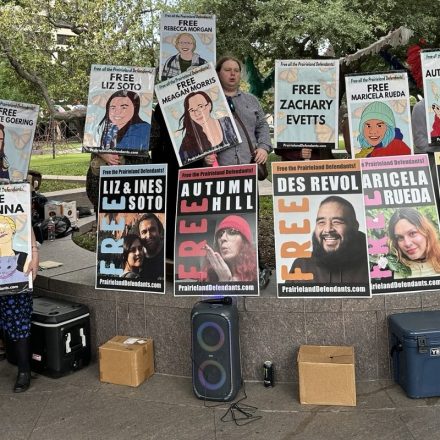
The Trump administration has escalated prosecutions against protest movements, charging demonstrators with terrorism-related offenses as part of a longstanding government strategy to suppress dissent, according to analysis from journalist Matt Sledge and antifa scholar Mark Bray.
Sledge attended the sentencing of the Prairieland defendants, a group prosecuted under terrorism statutes for their participation in protests. Bray, author of "Antifa: The Anti-Fascist Handbook," frames these prosecutions within a historical pattern. Federal authorities have repeatedly deployed terrorism charges against political opponents dating back decades, transforming protest activity into criminal conspiracy.
The approach carries significant legal and political consequences. Terrorism charges carry enhanced penalties compared to standard protest-related offenses and allow prosecutors to introduce evidence of broader political affiliations and speech. This expands the prosecutorial net far beyond individual acts.
The strategy reflects what Sledge and Bray characterize as a "Communist boogeyman" tactic. During the Cold War, the government weaponized fears of communism to justify surveillance and prosecution of civil rights activists, labor organizers, and antiwar protesters. Contemporary applications mirror that playbook by criminalizing left-wing activism through terrorism designations.
Prosecutors argue that coordinated protest activity, property damage, and group organization constitute conspiracy. Defense attorneys counter that these elements constitute protected political expression. The legal question hinges on whether protest planning itself becomes criminal when prosecutors frame it as terrorism.
The Prairieland case exemplifies this tension. Defendants faced charges stemming from protest activity rather than violence causing injury or death. Yet terrorism statutes applied to their conduct, carrying sentencing enhancements unavailable for standard misdemeanor charges.
Civil liberties organizations have raised concerns about prosecutorial overreach. The American Civil Liberties Union notes that applying terrorism law to protest movements fundamentally alters the legal landscape for diss