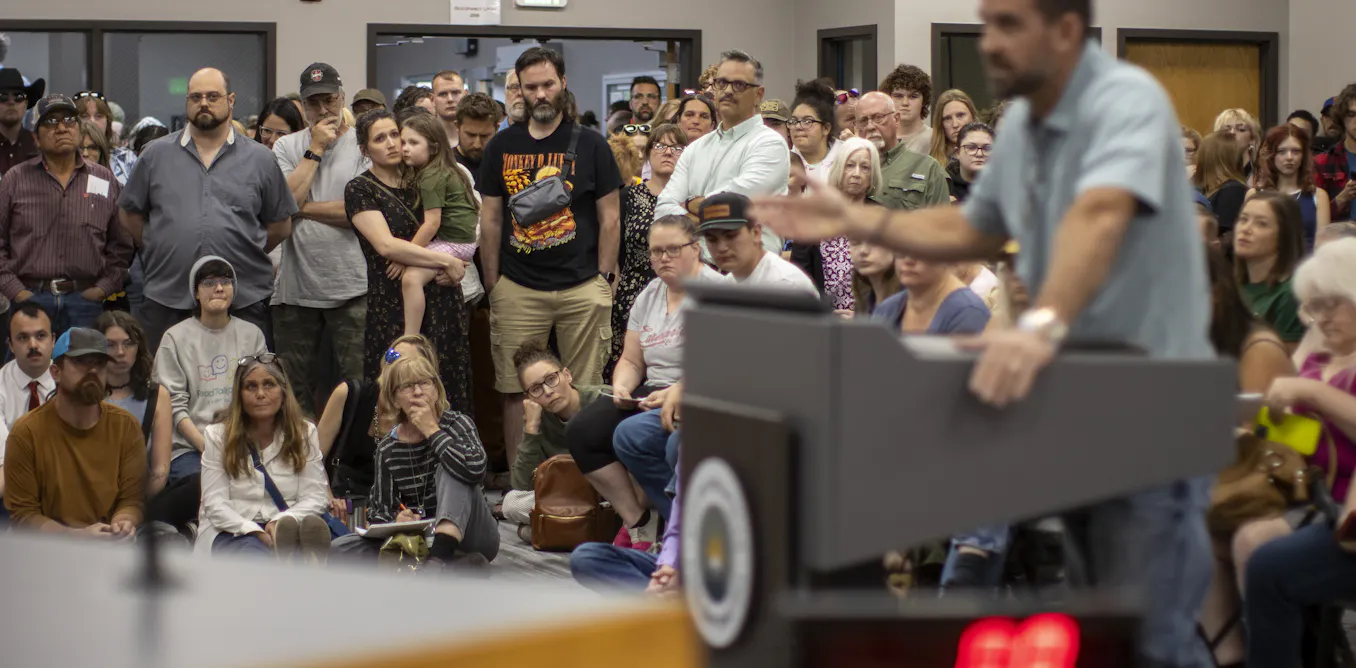
# Local Communities Push Back Against Tech Data Center Expansion
Communities across the United States are mobilizing against technology companies' plans to build data centers, citing environmental damage, noise pollution, and surging electricity costs. Residents in affected areas argue that while corporations reap profits from artificial intelligence and cloud computing infrastructure, their neighborhoods absorb the costs.
Data centers consume enormous amounts of electricity and generate continuous operational noise. In rural and suburban areas, residents report that facilities strain local power grids, driving up energy bills for ordinary households. Industrial cooling systems produce sound levels comparable to highway traffic, degrading quality of life in previously quiet neighborhoods.
The political battle reflects a broader clash between corporate expansion and local control. Town councils and county boards face pressure from both Big Tech companies promising jobs and tax revenue, and from constituents demanding environmental protection. Some communities have successfully imposed strict zoning restrictions or demanded costly mitigation measures. Others have granted approval after negotiating increased taxes on data center operations.
Environmental groups warn that data center construction accelerates climate change through massive energy consumption and water usage for cooling systems. Communities in water-scarce regions face particular risks from the centers' heavy demands on limited supplies.
The tension exposes limitations in how local governments negotiate with multinational corporations. Tech companies typically threaten to build elsewhere if communities impose stringent conditions, giving them leverage in negotiations. Smaller towns with limited legal resources struggle to enforce environmental standards against well-funded corporate legal teams.
State legislatures increasingly intervene, either restricting local zoning authority to facilitate data center development, or strengthening local protections. Virginia and other states have become data center hubs after loosening local regulations. California and New York have moved toward stricter oversight.
This decentralized pattern reflects America's federalist system, where local, state, and federal authorities compete for influence over development decisions. Communities asserting their interests against tech giants represent direct democratic participation, but they face structural