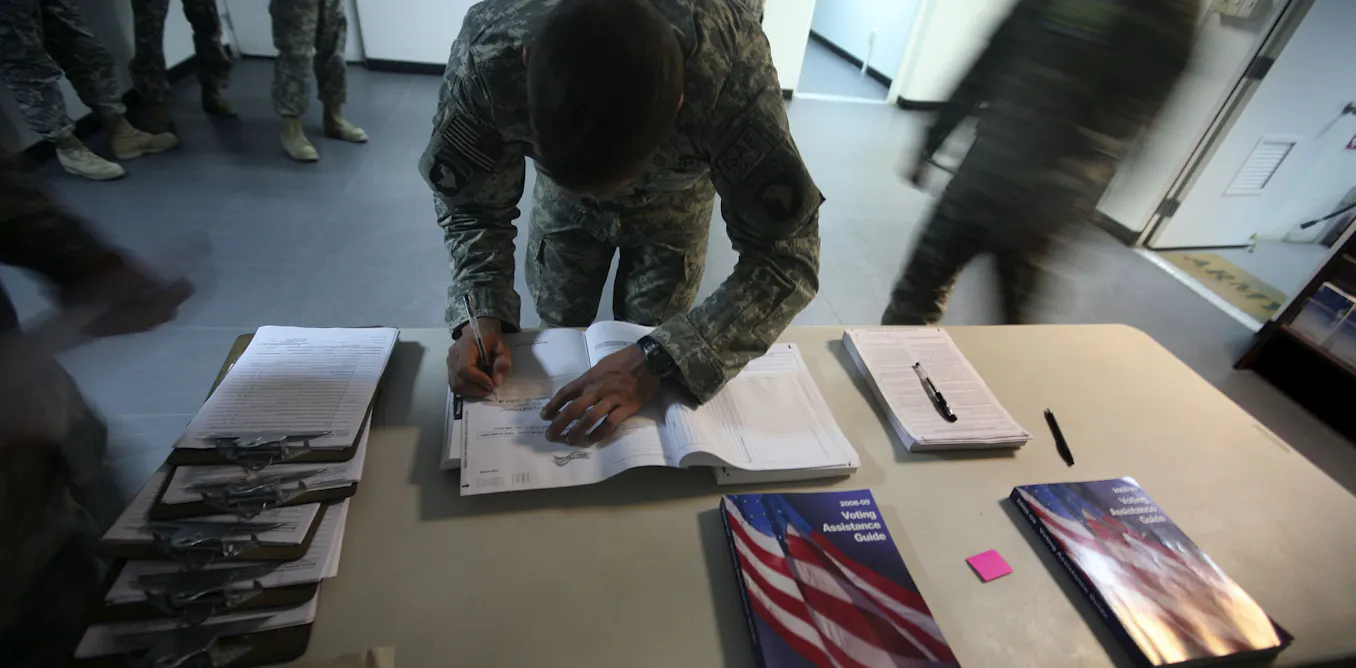
The Supreme Court's recent decision on mail-in voting traces its roots directly to Civil War-era military voting practices, establishing a constitutional foundation that shaped the justices' ruling more than 160 years later.
Mail-in voting emerged during the Civil War as a practical necessity. Soldiers fighting far from home needed a mechanism to participate in elections despite their absence. This wartime accommodation became the constitutional precedent that the Supreme Court referenced in its contemporary decision on ballot access.
The Court's ruling reflects how the justices grounded their analysis in historical practice rather than purely modern policy arguments. By anchoring the decision in the original purpose of mail-in voting, the justices created a framework that connected 19th-century military necessity to 21st-century voting rights. This historical approach influenced which arguments the Court found persuasive and which it rejected.
The connection between military voting and the Court's decision carries practical implications for how states structure their election systems. States citing the Civil War precedent could justify expanding mail-in voting access, while others argued the historical exception should remain narrowly tailored to military personnel and overseas citizens.
The decision demonstrates how the Court interprets voting rights by examining their historical origins. Rather than treating mail-in voting as a modern innovation, the justices treated it as an established constitutional practice with deep roots in American jurisprudence. This approach influenced debates over ballot access policies that extend far beyond the military context.
The historical framing proved decisive in determining what voting accommodations states could require or restrict. Justices who emphasized the Civil War origins of mail-in voting reached different conclusions than those who focused on contemporary election administration concerns.
This decision illustrates how historical context shapes constitutional interpretation in voting cases. The Supreme Court validated mail-in voting by connecting it to a legitimate historical purpose, creating legal authority for states to implement broader mail-voting programs.