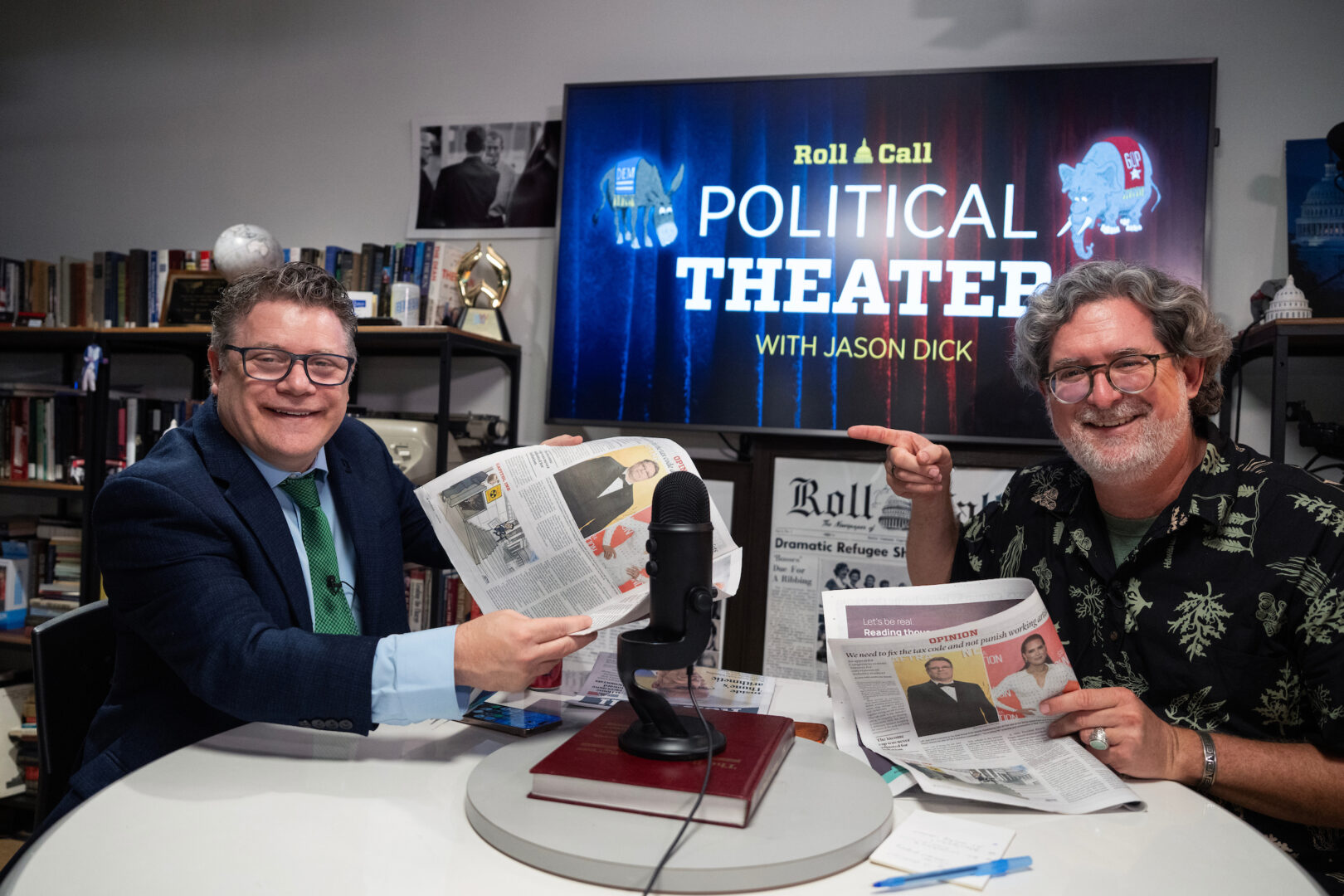
Sean Astin, president of the Screen Actors Guild-American Federation of Television and Radio Artists, visited CQ Roll Call's Washington newsroom Wednesday to discuss his union leadership and advocacy work on the Political Theater podcast.
Astin took the helm of SAG-AFTRA in 2023, inheriting an organization navigating complex labor negotiations and industry upheaval. The actor, known for roles in "The Lord of the Rings" and "Stranger Things," has positioned himself as a vocal advocate for performers' rights in an era of rapid technological change and streaming distribution models.
His tenure comes as SAG-AFTRA faces ongoing tensions with major studios over residuals, artificial intelligence protections, and compensation structures in the digital age. The union has pushed for stronger contract terms that account for how content is distributed across streaming platforms, where traditional revenue-sharing models prove inadequate.
Astin's appearance underscores how entertainment industry labor issues have gained political traction in Washington. Congress members increasingly engage with union leadership as debates intensify over AI regulation and worker protections in creative fields.
The SAG-AFTRA president brings both credibility and visibility to union negotiations. His public profile allows him to frame labor disputes for mainstream audiences and policymakers beyond traditional industry circles. This approach differs from previous union leadership, which operated more behind the scenes.
The podcast conversation highlights the convergence of entertainment politics and broader labor advocacy. With Hollywood split between major studios, streaming services, and independent producers, SAG-AFTRA faces fractured negotiating partners with competing interests. Astin must navigate these divisions while maintaining membership support and advancing substantive workplace protections.
His work reflects broader unionization trends among white-collar and creative workers seeking stronger footing in rapidly evolving industries. The stakes extend beyond actor compensation to questions about how artificial intelligence impacts creative work and whether existing labor frameworks adequately protect performers in