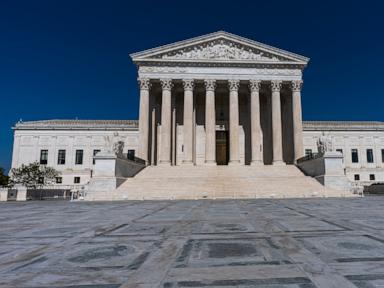
The Supreme Court affirmed the constitutional guarantee of birthright citizenship, ruling that children born in the United States become citizens automatically under the Fourteenth Amendment, regardless of their parents' immigration status.
The decision reaffirmed a century-old legal principle established by the 1898 United States v. Wong Kim Ark case. That ruling determined citizenship derives from birth on U.S. soil, not parental status. The 14th Amendment's citizenship clause, ratified after the Civil War, grants citizenship to all persons born in the country and subject to its jurisdiction.
The Court's divided opinion exposed fundamental disagreements among the justices about constitutional interpretation and immigration policy. Conservative justices who questioned birthright citizenship highlighted debates over the phrase "subject to the jurisdiction thereof," arguing it could exclude children of illegal immigrants or temporary visitors. Liberal justices countered that the jurisdiction language simply excludes foreign diplomats and invading armies, making clear that birth within U.S. borders confers citizenship.
This fractious ruling reflects broader tensions on the Court. The conservative majority, expanded under the Trump administration, has shown willingness to revisit long-settled legal doctrines. Progressive justices warned the decision threatened decades of established precedent and created uncertainty around citizenship rights.
The birthright citizenship question has resurged in recent political debates. Some Republicans, including former President Trump, proposed limiting the practice through executive action or constitutional amendment. Immigrant advocacy groups and Democrats defended birthright citizenship as a foundational American principle tied to the post-Civil War promise of equal protection.
The decision preserves current law but the sharp divisions hint at ongoing constitutional battles. With the Court's ideological composition shifting rightward, justices' willingness to question settled doctrine suggests other long-standing rights remain vulnerable to reexamination. The case highlights how the judiciary increasingly reflects partisan divides rather than legal consensus, with citizenship itself becoming contested constitutional terrain.