# Summary
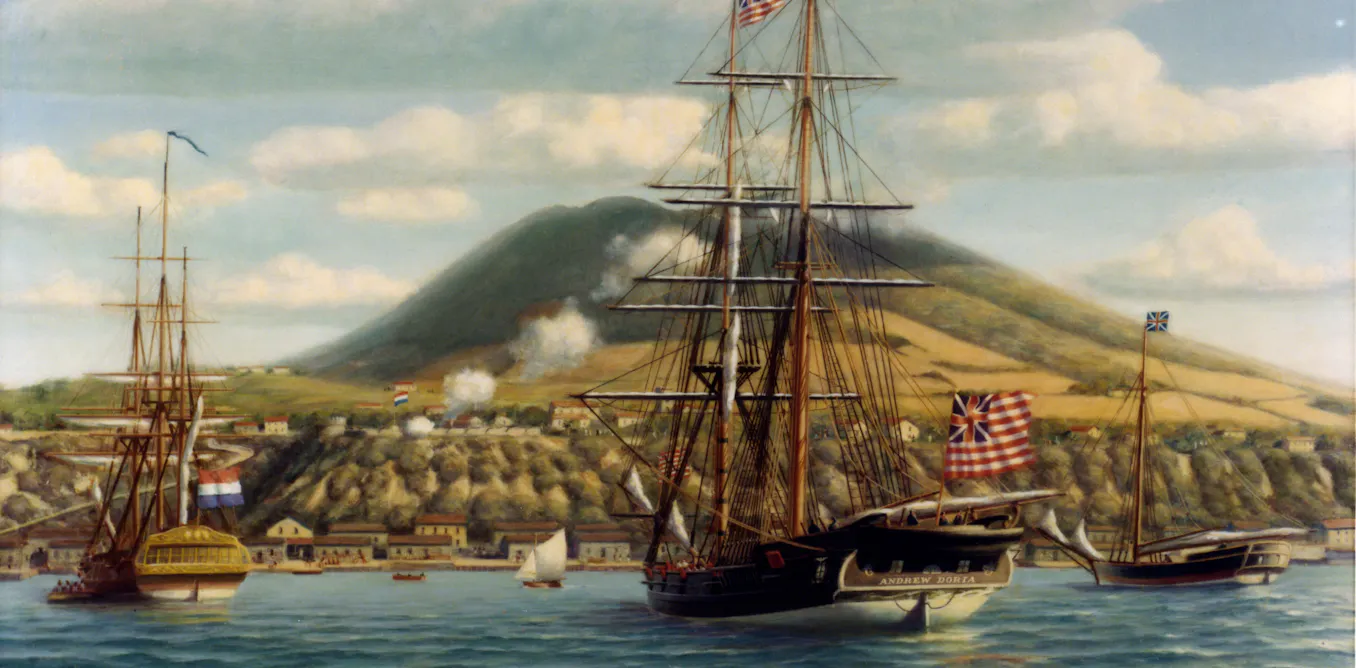
The American Revolution succeeded partly because of a tiny Caribbean island that served as a crucial hub for war supplies and trade. Without access to this strategic port, American colonists would have struggled to obtain essential goods and funding needed to sustain their rebellion against British rule.
The island functioned as a neutral trading ground where merchants could move supplies that the colonies required for survival and military operations. British naval blockades attempted to strangle colonial commerce, but this Caribbean outpost allowed merchants to circumvent those restrictions. Goods flowed through the port to American ships, which then distributed them to colonial ports.
The financial networks centered on this island also proved vital. Money from sugar and rum production in the Caribbean region fueled commerce that benefited American merchants and provided capital for the war effort. French and Dutch traders used the island to smuggle weapons, gunpowder, and other military supplies to the colonists without directly antagonizing British authorities.
This trade was not humanitarian charity. Merchants profited enormously from the Revolution by moving goods across borders and managing currency exchanges. Yet their profit motive aligned with American independence, creating a mutual interest that sustained the flow of resources when official channels closed.
The Revolution's success depended on more than George Washington's military genius or Thomas Jefferson's declarations. It required the practical infrastructure of global commerce and the willingness of foreign traders to exploit loopholes in the British blockade. This small Caribbean island became an indispensable link in the chain that connected American ideals to the material resources necessary for victory.