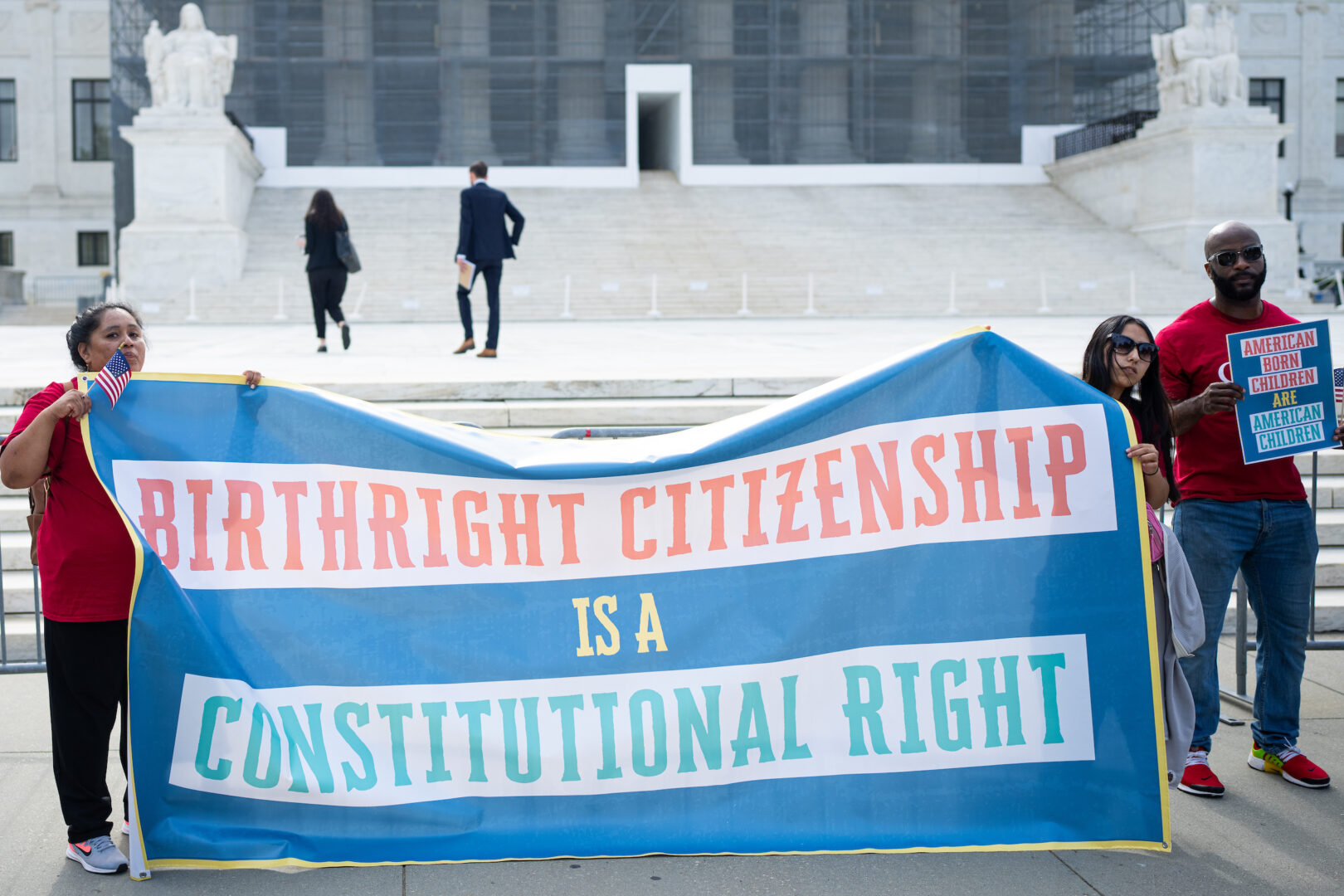
The Supreme Court blocked President Donald Trump's executive order attempting to deny birthright citizenship to children born in the United States, ruling 6-3 that Trump lacks unilateral authority to overturn the constitutional guarantee.
Chief Justice John G. Roberts Jr. wrote the majority opinion, joining five other justices in striking down the order. The decision reaffirmed the 14th Amendment's citizenship clause, which has guaranteed birthright citizenship for over 150 years. The clause states that all persons born in the U.S. and subject to its jurisdiction automatically become citizens, regardless of their parents' immigration status.
Trump had signed the executive order in an attempt to redefine birthright citizenship without congressional approval. The move targeted children born to undocumented immigrants and certain temporary visa holders. Legal experts immediately flagged the order as unconstitutional, noting that only Congress holds power to establish naturalization rules and that the 14th Amendment has settled citizenship law since Reconstruction.
Roberts' majority opinion emphasized that the executive branch cannot unilaterally reinterpret constitutional text to restrict rights that have been legally established for generations. The chief justice noted that overturning birthright citizenship would require amending the Constitution, not issuing an executive order.
The three dissenters, presumably from the court's conservative wing, did not elaborate on their position in the immediate ruling announcement.
Trump's citizenship order represented one of his most legally aggressive moves on immigration policy during his second term. The administration had framed the initiative as closing what officials claimed was a loophole exploited by migrants seeking to secure U.S. citizenship for their children.
The ruling delivers a significant defeat to Trump's immigration agenda and signals that even the conservative-majority Supreme Court recognizes constitutional limits on executive power. The decision also prevents a prolonged legal battle that would have tied up lower courts for years. Immigration restrictionists had viewed birthright citizenship elimination