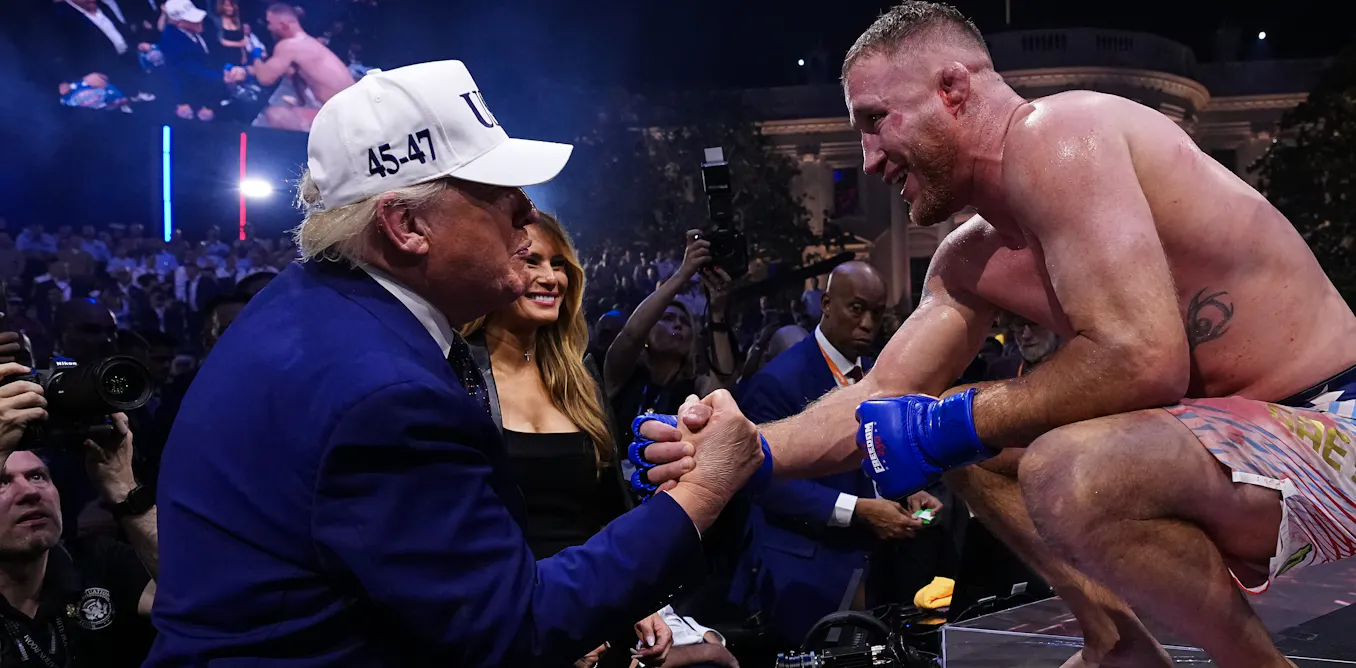
Physical combat spectacles serve as powerful vehicles for political messaging across centuries. Roman gladiatorial games functioned as moral theater where emperors demonstrated power and connected with citizens through orchestrated violence. Modern mixed martial arts events operate similarly, translating raw physicality into narratives about sacrifice, endurance, and national identity.
Right-wing political movements have capitalized on this dynamic more effectively than their counterparts. Conservative leaders and figures recognize that combat sports resonate with audiences seeking authentic displays of strength and dominance. The appeal lies partly in the sport's stripped-down nature: two fighters, minimal equipment, clear winners and losers. This simplicity contrasts sharply with political complexity and offers satisfying clarity to viewers.
MMA's rise coincides with increased conservative engagement with combat sports culture. Figures like Joe Rogan have built platforms amplifying right-leaning perspectives through fight commentary and podcast discussions. The sport attracts audiences receptive to narratives about masculine virtue, hierarchical competition, and meritocratic outcomes.
The political symbolism matters beyond aesthetics. Combat spectacles allow leaders to frame national purpose through physical contests. Winners represent national strength. Losers embody weakness or decadence. This framing sidesteps policy debate and works directly on emotional and psychological levels.
Liberal politics has largely ceded this symbolic territory. Progressives emphasize collective action, policy substance, and structural change rather than individual combat. This leaves right-wing figures to monopolize the moral and mythological dimensions of fighting culture.
The parallel between Roman emperors and contemporary political figures proves instructive. Both use combat spectacles to consolidate power by appealing to base instincts about strength and survival. Both transform athletic competition into statements about social hierarchy and national purpose. The medium changes from amphitheater to broadcast, but the underlying function remains constant.
Understanding this dynamic helps explain political polarization and cultural division. When one