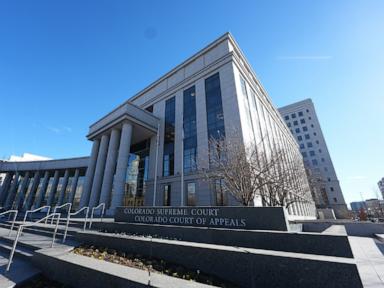
A Colorado court blocked two ballot initiatives that would have allowed voters to redraw the state's congressional districts in ways that favor Democrats. The court rejected the measures before they could appear on the November ballot.
The initiatives sought to alter Colorado's current congressional map, which was established through an independent redistricting commission created by voter approval in 2018. That commission produced a map considered relatively balanced between the two parties, with some competitive districts.
Supporters of the ballot measures argued that the current map disadvantages Democrats and that voters should have direct control over redistricting. They gathered signatures to place the initiatives before Colorado voters this fall.
The court determined that the proposed measures violated Colorado law or the state constitution. The specific legal grounds centered on how the initiatives were structured and whether they properly followed state requirements for ballot measures. Colorado courts have strict rules about what voters can decide through direct democracy.
Colorado Republicans opposed the efforts, contending that the current independent redistricting process works as intended and prevents partisan gerrymandering. The state's Republican Party argued that allowing voters to directly redraw districts would simply swap partisan gerrymandering for another form of it.
The 2018 redistricting amendment that created the independent commission reflected national frustration with partisan mapmaking. Colorado voters approved the measure overwhelmingly, establishing a process where a bipartisan commission draws districts for state legislature and congressional races rather than allowing politicians to control the process.
The court's decision protects that existing framework and prevents what opponents viewed as an attempt to circumvent the independent redistricting system. The rejection leaves Colorado's current congressional map in place for the 2024 elections and beyond, barring any other legal challenges or legislative changes.
This outcome reflects ongoing national debate over redistricting authority, with Democrats and Republicans disagreeing about whether independent commissions truly eliminate partisan advantage or simply produce different political outcomes than traditional legislative mapmaking.