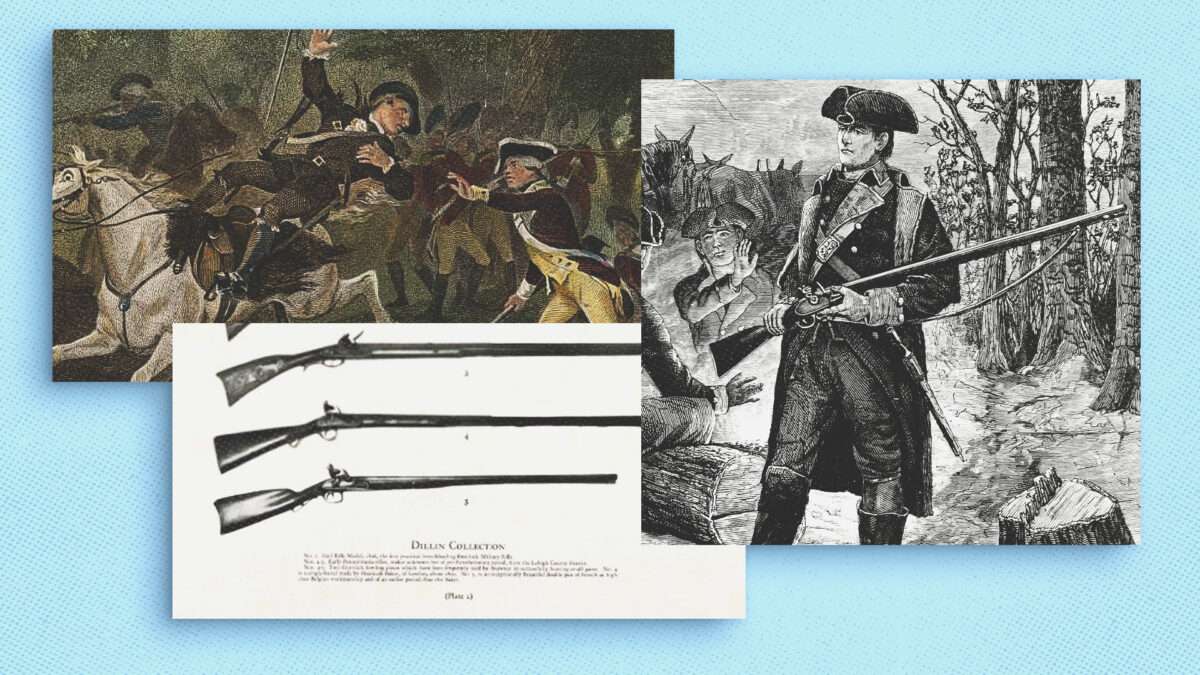
The American Long Rifle proved decisive in the Revolutionary War because of its superior accuracy compared to British military weapons. Colonial marksmen wielded rifles with grooved barrels that enabled precise fire at extended ranges, while British soldiers carried smoothbore muskets designed for close-quarters battlefield formations.
This technological advantage shaped American military tactics during the conflict. Patriot forces exploited the rifle's range to strike British regulars before they could close distance and deploy their own musket fire effectively. The weapon suited the colonists' guerrilla-style combat and frontier warfare experience far better than traditional European line-formation tactics.
The rifle's design reflected American manufacturing innovation and hunting traditions. Gunsmiths in Pennsylvania and other colonies refined European rifle designs to create lighter, more reliable weapons suited to colonial conditions. American riflemen at battles like Saratoga and later engagements demonstrated the tactical value of accurate long-range fire against massed infantry.
British military leadership initially underestimated the rifle threat. Their doctrine prioritized disciplined formations and rapid musket volleys over accuracy. By the time British commanders recognized the rifle's effectiveness, American forces had already used it to inflict devastating casualties and shift battlefield momentum in key engagements.
The Long Rifle became emblematic of American military independence and self-reliance. Its development and deployment represented colonial ingenuity and adaptation to local conditions, distinct from Old World military doctrine. The weapon reinforced the narrative of American exceptionalism that emerged from Revolutionary victory.
This technological dimension of the Revolution highlights how practical advantages in equipment and tactics can influence military outcomes. The Long Rifle stood as tangible proof that American innovations could outmatch British military tradition, a lesson that shaped American military thinking for generations.