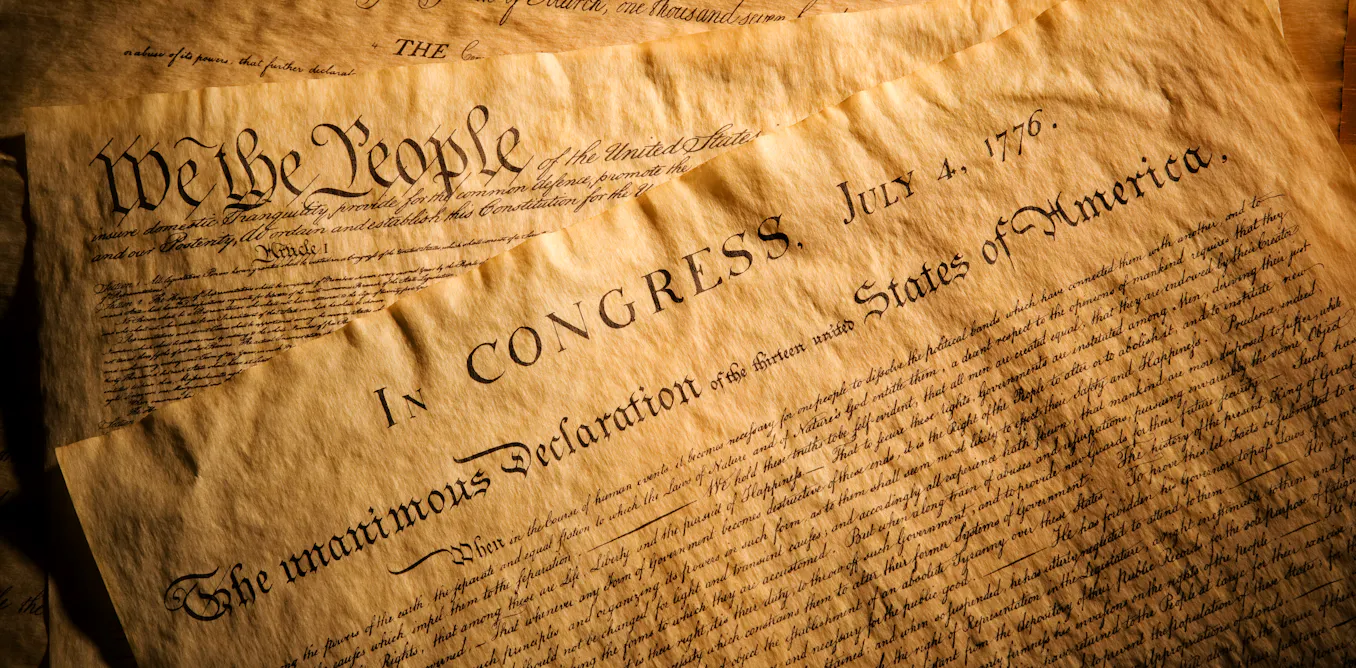
The Declaration of Independence lists grievances that resonate with modern political debates over judicial independence, executive power, and democratic accountability. A scholar of the founding document identifies parallels between complaints lodged against King George III in 1776 and contemporary concerns about institutional checks and balances.
The colonists objected to a judiciary influenced by the crown, lacking independence from executive authority. Today, debates over court packing, judicial nominations, and whether judges remain insulated from political pressure echo these founding anxieties. The framers feared judges beholden to a single powerful leader rather than to the law itself.
The Declaration also condemned arbitrary power exercised beyond public reach. The colonists protested actions taken without consent or accountability. Modern political disputes center on similar tensions: executive orders, regulatory agencies operating without clear congressional mandate, and questions about whether officials answer to voters or party leadership rather than constitutional limits.
The founders insisted that legitimate government requires consent of the governed. That principle underpins current debates about voting access, gerrymandering, and whether elected representatives remain responsive to constituents. When officials operate with little transparency or accountability, the parallel to colonial grievances becomes sharp.
The Declaration's emphasis on rule of law rather than rule of men remains the foundation of American governance theory. Yet recurring political crises raise whether institutions protect that principle effectively. Partisan conflicts over judicial independence, executive reach, and democratic participation suggest the tension between concentrated power and distributed authority persists.
Understanding these 250-year-old grievances provides a historical lens for evaluating current institutional disputes. The colonists identified specific harms caused by unchecked power. Modern citizens face similar questions about whether courts, executives, and bureaucracies operate within proper constitutional limits or exceed them in service to political factions rather than democratic principles.