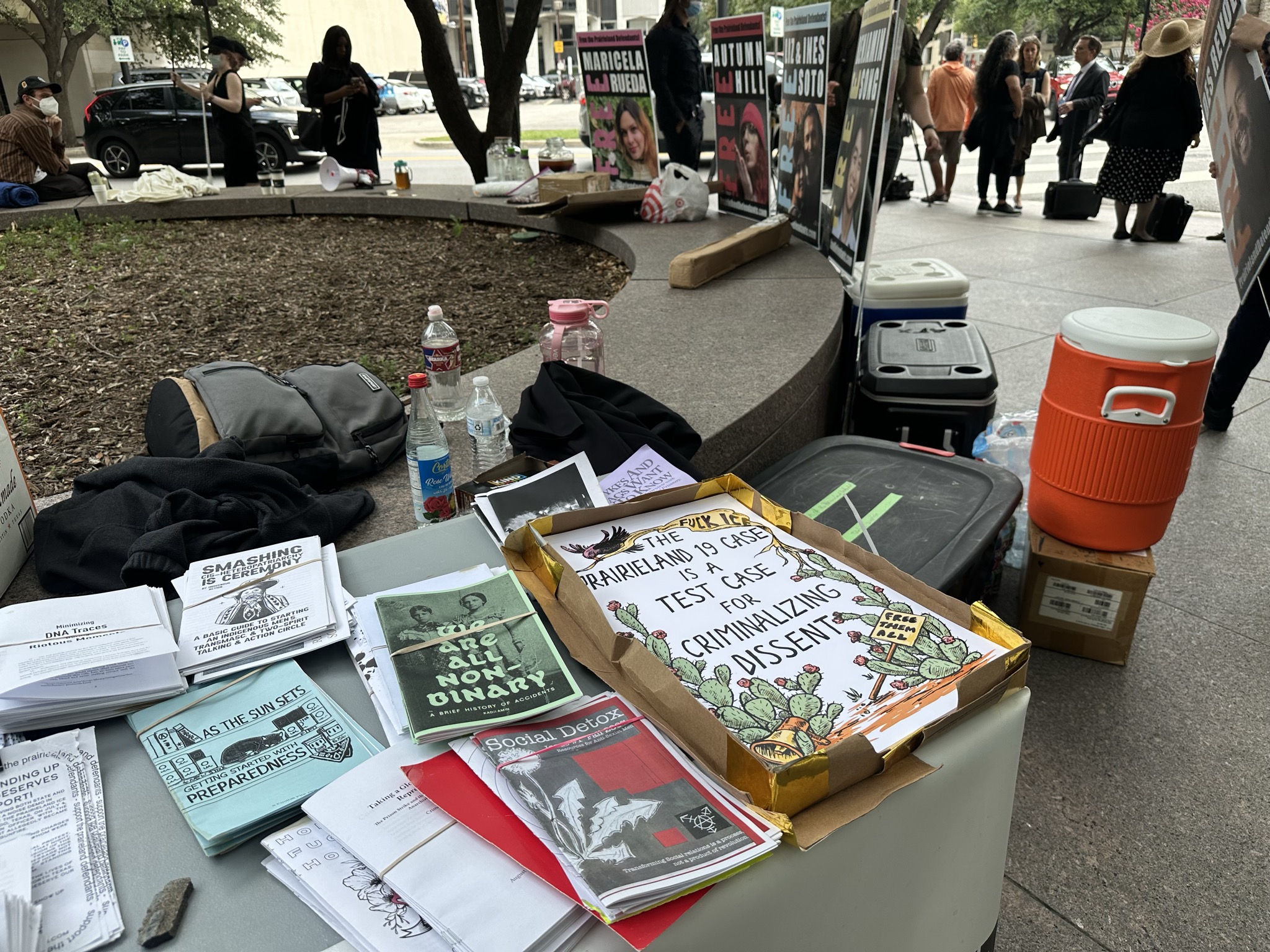
A federal judge sentenced a defendant to 30 years in prison for transporting zines related to the Prairieland protest, a case that legal analysts warn represents an aggressive expansion of the Trump administration's approach to suppressing dissent and free speech protections.
The defendant, Daniel Sanchez Estrada, was not present at the protest itself. Prosecutors secured the conviction based solely on his role in distributing printed materials, raising alarm among First Amendment advocates who argue the sentence reflects a troubling escalation in how the government treats political speech and protest-related activity.
The lengthy prison term for what amounts to distributing literature stands out as extraordinarily punitive under existing law. Free speech experts contend the conviction rests on a dangerously broad interpretation of federal statutes governing protest activity, essentially criminalizing the transportation and dissemination of political materials.
The case arrives amid the Trump administration's stated intention to crack down on left-wing activism and protest movements. Prosecutors have increasingly pursued aggressive charges against individuals connected to demonstrations, and this sentence suggests a willingness to deploy federal sentencing guidelines in ways that effectively chill political expression.
Legal observers describe the outcome as a "five-alarm fire" for constitutional protections. The precedent established through Sanchez Estrada's conviction could embolden prosecutors to pursue similar cases against journalists, activists, and ordinary citizens engaged in protected political speech. If upheld on appeal, the ruling creates a chilling effect on the distribution of protest materials and organizing literature.
The sentence also raises questions about judicial restraint. Even judges sympathetic to law enforcement objectives have typically shown skepticism toward such lengthy sentences for non-violent speech-related offenses. A 30-year term comparable to sentences for serious violent crimes represents a dramatic departure from historical norms in First Amendment cases.
Civil liberties organizations have begun coordinating legal challenges to the conviction, arguing it violates fundamental